The Small Business Laser Cutting Proposition
Small businesses across Kenya increasingly consider laser cutting capabilities for product customization, prototyping, and manufacturing. Whether through service providers or equipment investment, laser cutting offers capabilities previously accessible only to large manufacturers. However, resource constraints typical of small enterprises demand careful evaluation of costs, benefits, and strategic fit. This analysis examines laser cutting value for small business contexts, providing frameworks for investment decisions.
Service-based utilization—outsourcing laser cutting to specialized providers—offers small businesses access to capabilities without capital investment. This approach suits intermittent needs, diverse requirements, or uncertain demand. Costs scale with usage, preserving cash flow for other priorities. However, per-unit costs exceed in-house production, margins suffer, and dependency on providers creates scheduling and quality risks. The service model works best for businesses testing markets or with truly occasional laser cutting needs.
Equipment investment brings laser cutting in-house, eliminating per-unit service costs and enabling immediate turnaround. Desktop CO2 lasers suitable for small business use range KES 300,000-600,000, with operating costs under KES 500 per hour. This investment requires volume justification—businesses processing KES 50,000+ monthly in laser cutting services should evaluate equipment purchase. In-house capabilities also protect intellectual property and enable iterative prototyping without external coordination.
Revenue Opportunities and Market Applications
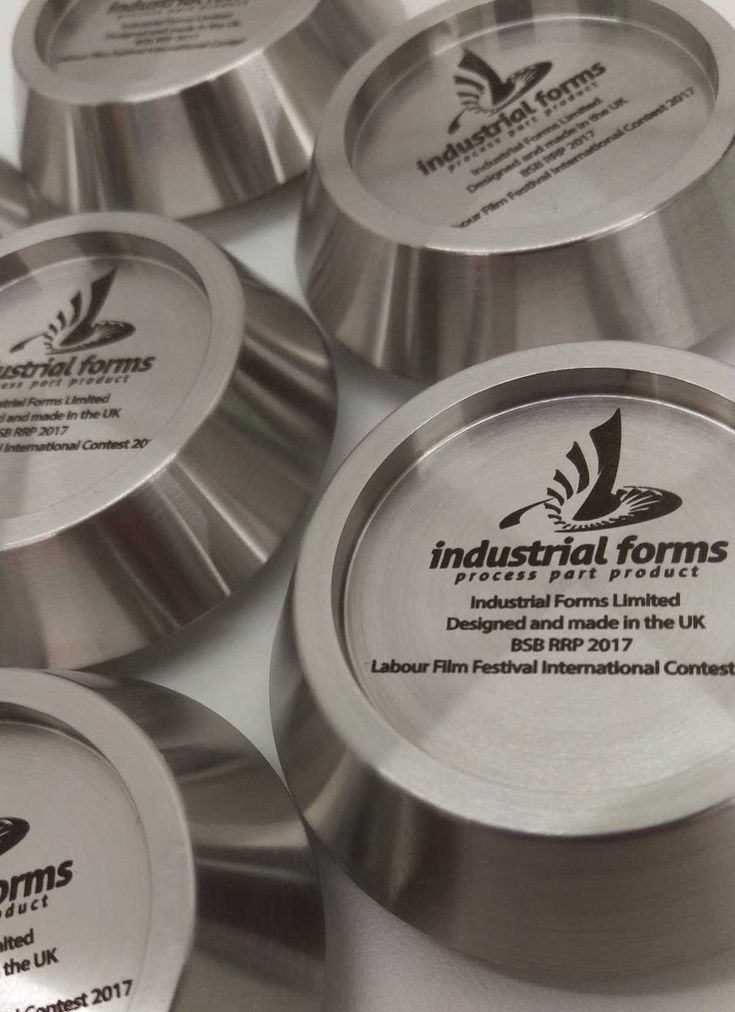
Product customization commands premium pricing in Kenyan market. Personalized gifts, corporate awards, wedding items, and branded merchandise sell at 2-5x material costs when laser-cut customization adds perceived value. Small businesses with design capabilities and market access can capture these margins. The key success factor is marketing and distribution—laser cutting capability without customer acquisition produces expensive hobby rather than business.
Prototyping services for other businesses represent B2B opportunity. Product developers, architects, and designers need physical prototypes without capital investment in equipment. Small businesses with laser cutting expertise can serve this market, charging KES 2,000-5,000 per hour for technical consultation and cutting services. This model requires technical credibility and professional presentation to attract corporate clients.
Component manufacturing for larger businesses offers production volume. Small laser cutting operations serve as overflow capacity for larger manufacturers or produce specialized components uneconomical for mass production. These relationships provide steady revenue but require quality systems, reliable delivery, and competitive pricing. Success depends on operational excellence and relationship management rather than technical capability alone.
| Business Model | Investment Level | Revenue Potential | Key Success Factors |
|---|---|---|---|
| Custom products (B2C) | Medium (Service or small laser) | High margins, variable volume | Marketing, design, customer service |
| Prototyping services (B2B) | Medium-High (Quality equipment) | Hourly rates, project fees | Technical expertise, professional network |
| Component production | High (Industrial equipment) | Volume-dependent, competitive pricing | Quality systems, reliability, relationships |
| Value-added fabrication | Medium (Laser + other tools) | Premium pricing for finished goods | Design capability, finishing skills |
| Educational/makerspace | Medium (Community equipment) | Membership, training fees | Community building, technical support |
Cost-Benefit Analysis Framework
Fixed cost analysis for equipment investment includes depreciation, maintenance, facility, and labor. A KES 500,000 laser system depreciated over 5 years costs KES 100,000 annually. Maintenance and consumables add KES 50,000-100,000 yearly. Facility costs (space, power, ventilation) range KES 30,000-60,000 monthly depending on location. Operator labor, whether owner or employee, represents significant cost. Total fixed costs typically reach KES 300,000-600,000 annually before processing any material.
Variable costs per hour include electricity (KES 100-200), assist gas (KES 50-150), consumables (lenses, filters), and material. Total variable costs range KES 300-600 per hour of operation. These costs apply regardless of revenue generation—idle equipment accumulates fixed costs without offset. Break-even analysis requires sufficient volume to cover fixed costs through contribution margin (revenue minus variable costs).
Service pricing comparison reveals equipment economics. Outsourced laser cutting costs KES 1,500-3,000 per hour including markup. In-house operation costs KES 300-600 variable plus fixed cost allocation. At 40 hours monthly utilization, fixed costs add KES 600-1,250 per hour, making total costs KES 900-1,850 per hour—potentially competitive with service pricing but requiring volume commitment. At 100+ hours monthly, in-house costs drop below service pricing significantly.
Strategic Value Beyond Direct Economics
Speed-to-market advantages benefit product development cycles. In-house laser cutting enables same-day prototyping versus days or weeks for service turnaround. This acceleration allows more design iterations, faster problem resolution, and earlier market entry. For competitive markets, speed advantages may outweigh pure cost considerations. The ability to respond immediately to customer requests also improves service levels and win rates.
Intellectual property protection favors in-house processing for sensitive designs. Sending files to external providers creates disclosure risks, particularly for innovative products or proprietary components. In-house cutting keeps designs confidential, important for businesses with unique intellectual property. Non-disclosure agreements with providers offer partial protection but cannot fully eliminate risks.
Capability integration enables unique offerings. Combining laser cutting with other in-house capabilities—woodworking, electronics, assembly—creates differentiated products impossible through outsourcing coordination. Vertical integration captures value addition through production chain, improving margins. Design-build capabilities also attract customers seeking single-source solutions.
Learning and innovation benefits accompany hands-on equipment operation. Direct engagement with laser cutting reveals design optimization opportunities, material behaviors, and process improvements. This learning builds competitive capability over time, enabling offerings beyond commodity cutting services. Technical expertise becomes strategic asset differentiating from pure service resellers.
Risk Factors and Mitigation
Utilization risk—the possibility of insufficient volume to justify investment—represents primary concern. Equipment purchased based on optimistic projections becomes expensive liability if demand materializes slowly. Mitigation strategies include starting with service-based models to validate demand, purchasing used equipment reducing initial investment, or joining makerspaces providing access without ownership. Conservative volume projections and break-even analysis prevent overcommitment.
Technical complexity challenges small businesses lacking manufacturing experience. Laser cutting requires design skills, material knowledge, maintenance capability, and troubleshooting ability. Learning curves produce rejected parts, equipment damage, and customer dissatisfaction during skill development. Training investment, conservative initial projects, and potentially hiring experienced operators reduce technical risks.
Market competition intensifies as laser cutting becomes more accessible. Differentiation through quality, specialization, or service becomes essential as commodity cutting faces price competition. Businesses must develop unique value propositions beyond mere cutting capability—design services, material expertise, finishing capabilities, or market specialization. Undifferentiated small operations struggle against larger competitors with scale advantages.
Equipment obsolescence and maintenance challenges affect long-term viability. Laser technology evolves, potentially making purchased equipment outdated. Maintenance requires technical skills or expensive service contracts. Budgeting for technology refresh every 5-7 years prevents stranded assets. Maintenance skills or reliable service relationships ensure equipment uptime critical for business operations.
Decision Framework for Small Businesses
Service utilization suits businesses with: intermittent laser cutting needs (under 20 hours monthly), diverse requirements better served by varied provider capabilities, uncertain demand preventing volume commitment, or capital constraints prioritizing other investments. Service relationships should be evaluated regularly—as volume grows, equipment economics may shift favorably.
Equipment investment becomes viable when: monthly laser cutting expenses exceed KES 50,000 consistently, speed and control advantages justify cost premiums, intellectual property protection is critical, or integration with other capabilities creates unique value. Investment should follow market validation through service utilization, not speculative demand projections.
Hybrid approaches optimize for many small businesses. Maintaining relationships with providers for overflow, specialized capabilities, or peak demand while handling routine work in-house balances cost and flexibility. This model requires careful coordination but offers best of both worlds—economy for volume work, capability for specialized needs.
Luna Graphics supports small businesses across Kenya with both laser cutting services and consultation on equipment investment decisions. Our experience with hundreds of small business clients informs practical advice on market opportunities, cost structures, and strategic positioning. Whether you need production services or guidance on capability development, contact our team to discuss how laser cutting can advance your small business objectives.
Written by Ian Love
Marketing Director
Professional contributor at Luna Graphics specializing in printing and branding solutions.