
Metal Laser Cutting Technology
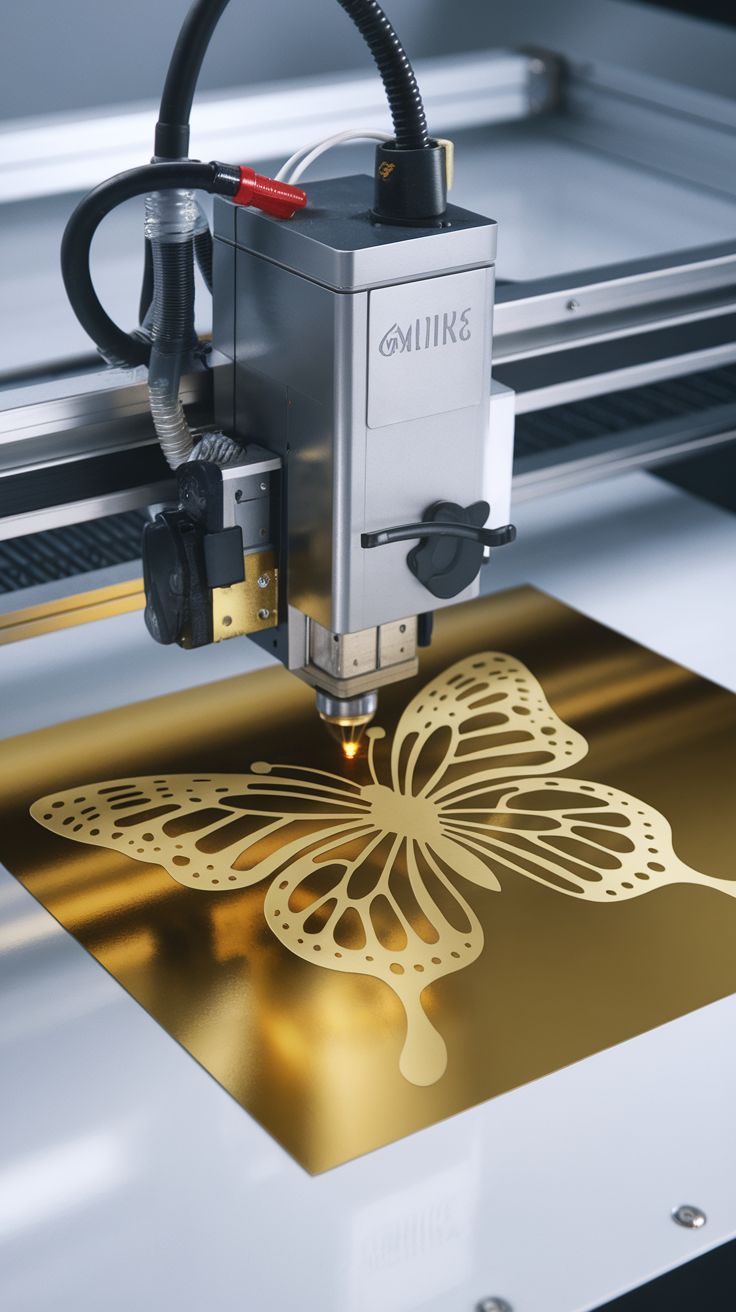
Metal laser cutting requires fundamentally different technology than the CO2 lasers used for organic materials. Fiber lasers, operating at 1.06 micrometer wavelength, provide the metal absorption characteristics necessary for effective cutting. This solid-state technology delivers beam quality and power density capable of processing reflective metals that challenge other cutting methods. Understanding fiber laser capabilities and limitations enables effective specification of metal laser cutting for industrial, architectural, and commercial applications.
The fiber laser cutting process involves focusing intense laser energy onto metal surfaces, melting material in localized zones, and blowing molten metal away with high-pressure assist gas. Unlike CO2 laser cutting which primarily vaporizes material, fiber laser cutting relies on melt ejection, creating characteristic cut edges with slight roughness (striations) but excellent perpendicularity. The process generates significant heat, requiring careful parameter control to minimize heat-affected zones and thermal distortion.
Equipment capabilities vary significantly across Kenyan market. Entry-level fiber laser systems at 500W-1kW handle thin sheets (1-3mm) of mild steel and stainless steel. Mid-range systems at 2kW-4kW cut 6-12mm steel and 4-8mm aluminum. High-power systems exceeding 6kW process 20mm+ thick materials. Most Kenyan providers operate 1kW-3kW systems suitable for general fabrication but limited for heavy industrial applications. Equipment capability directly determines available material thickness and cutting speed.
Material Compatibility and Characteristics
Mild steel (carbon steel) cuts most efficiently due to exothermic reaction with oxygen assist. The oxidation reaction generates additional heat, increasing cutting speed 30-50% compared to inert gas cutting. However, oxygen cutting produces oxidized edges requiring removal for welding or painting. Nitrogen cutting prevents oxidation but proceeds slower and requires higher power. Mild steel up to 12mm cuts readily with 2kW systems, while thicker materials require proportionally higher power.
Stainless steel demands nitrogen assist to prevent oxidation and discoloration that would compromise corrosion resistance. The material's poor thermal conductivity compared to mild steel makes cutting easier in some respects—heat concentrates in cut zone rather than dissipating. However, stainless steel's viscosity when molten requires higher gas pressures for effective ejection. Austenitic grades (304, 316) cut more readily than martensitic or duplex grades. Edge quality is generally excellent with sharp, clean cuts.
Aluminum challenges laser cutting due to high reflectivity and thermal conductivity. The material reflects laser energy until melted, requiring higher initial power or specialized beam modulation. Once melting begins, high thermal conductivity draws heat away from cut zone, requiring sustained high power. Despite these challenges, fiber lasers cut aluminum effectively up to 6mm with 2kW systems, 12mm with 4kW. Pure aluminum cuts more easily than alloys; 6061 aluminum presents moderate difficulty while 7075 and cast aluminum may require parameter optimization.
| Metal Type | Cut Quality | Typical Thickness | Key Considerations |
|---|---|---|---|
| Mild Steel | Good, some dross | Up to 20mm+ | Oxygen for speed, nitrogen for clean edges |
| Stainless Steel | Excellent, clean | Up to 12mm+ | Nitrogen required, no discoloration |
| Aluminum | Good, some burr | Up to 10mm+ | High reflectivity, thermal conductivity |
| Brass | Good | Up to 6mm | Copper content affects cutting |
| Copper | Fair to good | Up to 3mm | Highly reflective, difficult |
| Titanium | Excellent | Up to 8mm | Inert gas required, specialty application |
| Galvanized Steel | Good | Up to 3mm | Zinc coating affects edge quality |
Cutting Parameters and Process Control
Power, speed, and assist gas pressure form the parameter triangle determining cut quality. Higher power enables faster cutting or thicker materials but increases heat input and potential distortion. Speed must balance throughput against quality—excessive speed leaves uncut sections or poor edge quality; insufficient speed wastes time and increases heat effects. Gas pressure (typically 10-20 bar for nitrogen, lower for oxygen) must eject molten material effectively without excessive turbulence.
Focus position critically affects cut geometry. Standard practice focuses at material surface for thin sheets, slightly below surface for thicker materials. Focus position affects kerf width, edge perpendicularity, and dross formation. Advanced systems use dynamic focus adjusting during cutting to optimize as material thickness changes or to compensate for thermal distortion.
Nozzle design and standoff distance influence gas flow dynamics. Nozzle diameter, shape, and proximity to workpiece affect gas velocity and coverage of cut zone. Standard cutting uses approximately 1mm standoff (nozzle-to-material distance), but this varies by application. Collision detection prevents damage from material warping or positioning errors.
Piercing parameters differ from cutting parameters. Initial material penetration requires higher power and different gas flow than steady-state cutting. Poor piercing creates spatter, crater formation, or incomplete starts affecting cut quality. Advanced piercing techniques (ramp piercing, pulse piercing) improve starting points for thick materials or sensitive applications.
Quality Characteristics and Tolerances
Edge quality in laser-cut metal shows characteristic striations—fine lines along cut direction resulting from melt ejection dynamics. These striations are normal and generally acceptable for most applications; their severity indicates parameter optimization. Edge roughness typically measures Ra 10-30 micrometers, suitable for many applications without secondary finishing. Critical applications may require machining or grinding to improve surface finish.
Heat-affected zones (HAZ) extend 0.1-0.5mm from cut edge depending on material and parameters. In mild steel, HAZ shows as discoloration and slight hardening. Stainless steel HAZ may show sensitization affecting corrosion resistance if not properly controlled. Aluminum HAZ is minimal due to material properties. For applications requiring minimal thermal effects, parameter optimization or post-cut heat treatment may be necessary.
Dimensional tolerances typically achieve ±0.05-0.1mm for thin materials, ±0.1-0.2mm for thicker sections under stable conditions. Thermal distortion during cutting affects final dimensions, particularly for large parts or thin materials. Fixturing, tabbing parts in sheet, and controlled cutting sequences minimize distortion. For precision applications, waterjet cutting may offer superior accuracy despite slower speed.
Kerf width in fiber laser cutting ranges 0.1-0.3mm depending on material, thickness, and focus. This width must be accounted for in part nesting and dimensional specification. Unlike CO2 laser cutting where kerf is consistent, fiber laser kerf varies with material thickness and parameters, requiring attention for precision assemblies.
Applications and Market Segments
Industrial component manufacturing utilizes laser cutting for machinery parts, enclosures, brackets, and fixtures. The precision and speed suit low-to-medium volume production where tooling costs would be uneconomical. Rapid turnaround enables just-in-time manufacturing and design iteration. Kenyan manufacturing increasingly adopts laser cutting for export-oriented production requiring international quality standards.
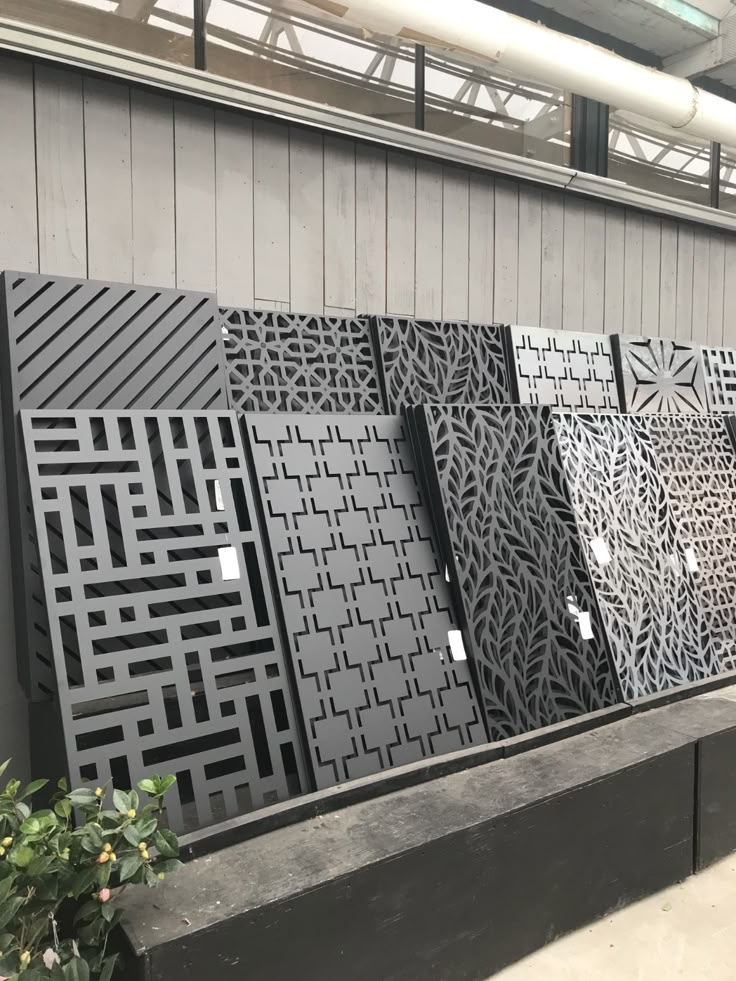
Architectural metalwork benefits from laser cutting's ability to create intricate patterns and precise components. Decorative screens, facade elements, railing panels, and signage combine structural metal with aesthetic design. Stainless steel architectural elements particularly suit laser cutting, achieving premium appearance with minimal finishing. The technology enables customization without custom tooling costs, supporting bespoke architectural projects.
Automotive and transportation applications include component production, customization, and repair. Exhaust systems, brackets, chassis components, and decorative elements fabricate efficiently. Motorsport applications demand lightweight, precision components ideally suited to laser cutting capabilities. As Kenyan automotive sector develops, laser cutting provides flexible manufacturing support.
Electronics and electrical industries use laser cutting for enclosures, shields, busbars, and heat sinks. The precision enables complex geometries for thermal management and electromagnetic shielding. Thin material cutting (under 1mm) achieves high speed and excellent edge quality for electronic component production.
Economics and Service Availability
Cost structures for metal laser cutting include machine time, assist gas consumption, and material. Machine rates range KES 3,000-8,000 per hour depending on equipment power and provider positioning. Nitrogen consumption for stainless steel and aluminum adds significant cost—high-pressure nitrogen represents major operating expense. Oxygen for mild steel cutting costs less but may require post-cut cleanup. These consumables often exceed machine time costs for thick material or high-quality requirements.
Material utilization significantly impacts project economics. Nesting efficiency—arranging parts to minimize waste—affects material costs substantially. Laser cutting's narrow kerf improves yield compared to plasma or oxy-fuel cutting. However, fiber laser cutting requires careful material handling to prevent surface damage affecting cut quality, potentially reducing effective yield.
Service availability in Kenya concentrates in Nairobi industrial areas, with limited providers in Mombasa and other cities. Equipment investment requirements (KES 5,000,000+ for capable systems) limit provider numbers. When specifying metal laser cutting, verify provider capabilities match your material and thickness requirements—many "laser cutting" services offer only CO2 systems unsuitable for metals.
Comparison with alternative metal cutting methods shows laser advantages in precision and speed for thin materials, but disadvantages in thickness capability and cost for heavy sections. Plasma cutting handles thicker materials at lower cost but with poorer precision and edge quality. Waterjet cutting offers superior precision and no heat effects but slower speed and higher operating costs. Oxy-fuel cutting remains economical for thick mild steel but lacks precision and material versatility.
Luna Graphics offers fiber laser metal cutting services complementing our CO2 capabilities, providing comprehensive material processing for Kenyan industry. Our metal cutting expertise spans parameter optimization for various alloys, quality systems ensuring dimensional accuracy, and finishing services delivering production-ready components. Contact our technical team to discuss your metal fabrication requirements and discover how precision laser cutting can advance your manufacturing capabilities.
Written by Ian Love
Marketing Director
Professional contributor at Luna Graphics specializing in printing and branding solutions.