
The Wedding Monogram Tradition
Wedding monograms—combining couple initials into distinctive designs—have evolved from simple embroidery patterns to sophisticated branding elements unifying entire celebrations. Laser cutting enables realization of complex monogram designs across diverse materials and scales, creating personalized visual identity for weddings. This personalization transforms generic celebrations into uniquely reflective events.
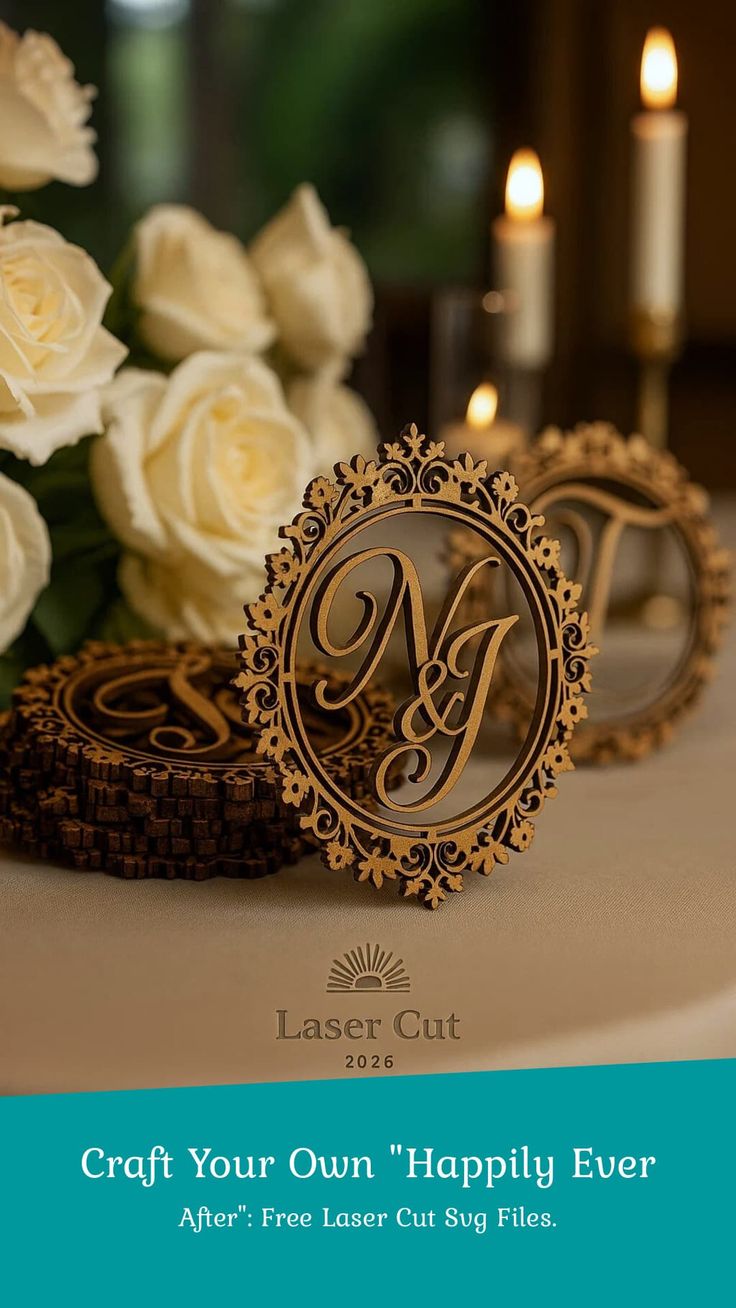
Monogram design balances tradition with individuality. Classical interlocking scripts suggest timeless elegance; modern geometric arrangements convey contemporary style; illustrative elements incorporate shared interests or heritage. Laser cutting precision renders any design accurately, enabling exploration of styles impossible with traditional methods. The monogram becomes couple's signature mark.
Application across wedding elements creates cohesive branding. Monograms appear on invitations, signage, décor, favors, and attire—repeated visual theme tying disparate elements together. This consistency professionalizes wedding design and creates memorable visual identity. Guests recognize and remember the personalized mark.
Monogram Design Styles
Traditional interlocking scripts feature flowing letterforms intertwined with flourishes. Victorian and Edwardian influences create romantic, formal appearance. These designs suit classic weddings and formal venues. Laser cutting achieves fine detail in intricate scripts; scale must maintain legibility; material thickness affects delicate elements.
Modern geometric monograms use clean lines, shapes, and negative space. Sans-serif letterforms arranged in grids, circles, or abstract compositions. These designs suit contemporary weddings and modern venues. Laser cutting precision essential for geometric accuracy; materials like acrylic and metal enhance modern aesthetic.
Illustrative monograms incorporate imagery beyond letters. Shared interests (travel, music, pets); cultural symbols; nature elements (floral, botanical); architectural features (venue silhouettes). These designs tell stories beyond names. Laser cutting renders detailed illustrations; complexity must suit material scale and cutting capabilities.
Minimalist approaches emphasize simplicity and space. Single letter or clean initials with generous spacing; subtle rather than ornate; sophisticated restraint. These designs suit modern, understated weddings. Laser cutting quality evident in precision of simple forms; material and finish become design focus.
| Style | Characteristics | Best Materials | Applications |
|---|---|---|---|
| Traditional Script | Intertwined, flourished, romantic | Wood, Acrylic, Paper | Formal weddings, classic venues |
| Modern Geometric | Clean lines, abstract, contemporary | Acrylic, Metal | Modern weddings, urban venues |
| Illustrative | Imagery integration, storytelling | Wood, Acrylic | Themed weddings, personal interests |
| Minimalist | Simple, spacious, refined | Metal, Acrylic, Wood | Contemporary, understated events |
| Vintage | Period styling, ornate details | Wood, Brass | Historic venues, retro themes |
| Cultural | Heritage symbols, traditional patterns | Wood, Metal | Cultural celebrations, fusion weddings |
Applications Across Wedding Elements
Invitations and stationery establish monogram presence first. Monogram as primary invitation graphic; envelope seals; liner patterns; card backs. Consistent use across suite pieces creates cohesive introduction. Scale variation—large on invitation, small on reply cards—creates hierarchy.
Ceremony elements incorporate monograms meaningfully. Aisle runner designs; ceremony backdrop focal points; program covers; unity ceremony items. These applications frame the ritual significance of marriage with personal symbol. Scale appropriate to viewing distance and photography.
Reception décor repeats monogram throughout space. Welcome signs featuring monogram prominently; table numbers incorporating initials; dance floor decals; cake topper centering dessert. Repetition creates immersive branded environment without overwhelming. Placement considers sightlines and photography.
Personal items and favors extend monogram to guests. Napkins, coasters, matchbooks; favor tags and packaging; photo booth props; thank you notes. These touches demonstrate attention to detail and provide guests with personalized mementos. Practical utility combined with branding.
Attire and accessories incorporate monograms intimately. Bride accessories (shoes, clutch, veil); groom details (cufflinks, tie clip, socks); wedding party gifts; family member acknowledgments. These private applications carry personal meaning beyond public display. Subtlety often appropriate for wearable items.
Technical Execution
Scale variation requires design adaptation. Large applications (backdrops) need bold, simple forms visible from distance; small applications (favors) allow fine detail appreciated up close. Design may need simplification for large scale or elaboration for small. Test cuts at various sizes verify effectiveness.
Material selection affects monogram appearance significantly. Clear acrylic creates floating effect; wood warmth suggests tradition; metal conveys permanence; paper enables intricate detail. Material should suit application durability needs and design aesthetic. Finish (polished, matte, painted) further refines appearance.
Color and finish coordination with wedding palette ensures cohesion. Acrylic colors matching event colors; wood stains coordinating with venue; metal finishes reflecting flatware or jewelry. Monograms need not match exactly but should relate harmoniously to overall color scheme.
Negative space and positive form create different effects. Cut-out monograms (negative space) allow background show-through; solid monograms (positive form) provide graphic presence; layered combinations create depth. Technique selection affects material efficiency, structural integrity, and visual impact.
Design Development Process
Initial concepts explore style directions. Sketching multiple approaches; reviewing with couple for resonance; refining promising directions. Design should reflect couple personality and wedding vision, not just designer preference. Iteration hones concepts toward final selection.
Digital refinement prepares designs for production. Vector drawing ensuring cut-ready files; testing letterform legibility; verifying structural integrity of connections; optimizing for material and scale. Professional design software enables precision and modification.
Prototyping validates design before full production. Sample cuts in intended material; evaluation of appearance and durability; testing of various scales; refinement based on physical evaluation. Prototypes prevent costly errors in full production and enable client approval.
Production planning coordinates monogram delivery across vendors. Invitation printer needs digital files; signage fabricator needs production files; cake designer needs topper specifications; favor assembler needs tags. Centralized monogram management ensures consistency.
Luna Graphics specializes in wedding monogram design and fabrication for Kenyan couples. Our design services develop personalized marks reflecting unique relationships; our laser cutting precision realizes designs across materials and scales; our coordination ensures consistent application throughout celebrations. From initial concept through final installation, we create monogram systems making weddings distinctly personal. Contact us to develop your wedding monogram.
Written by Ian Love
Marketing Director
Professional contributor at Luna Graphics specializing in printing and branding solutions.