
Evolution vs. Revolution in Brand Management
Brands require periodic refreshment to maintain relevance as markets, audiences, and organizations evolve. However, rebranding represents significant investment and risk requiring careful justification. Understanding legitimate triggers for rebranding helps Kenyan business leaders distinguish necessary evolution from superficial change, ensuring brand investments deliver strategic value rather than satisfying temporary restlessness.
Rebranding encompasses spectrum from subtle refinement (evolution) to complete transformation (revolution). Evolution adjusts visual identity, messaging, or experience while maintaining core recognition; revolution fundamentally changes brand positioning, name, or identity. Severity should match strategic situation—minor misalignment needs evolution; fundamental strategic shift may require revolution.
Strategic Triggers for Rebranding
Merger and acquisition activity often necessitates brand integration decisions. Combining organizations must decide: which brand survives; whether to create new entity; or how to structure brand architecture. These decisions affect customer retention, employee morale, and market positioning significantly. Rebranding post-merger signals new beginning while risking loss of acquired equity.
Strategic repositioning requires brand realignment when organizations shift market focus, target audiences, or value propositions. If brand no longer communicates what organization does or for whom, confusion and missed opportunities result. Rebranding makes new positioning tangible and credible.
Geographic expansion may require brand adaptation for new cultural contexts. Names, colors, or symbols carrying unintended meanings; positioning that doesn't translate; or competitive differentiation that doesn't apply. International expansion often triggers brand review.
Portfolio rationalization simplifies complex brand architectures that confuse customers and fragment investment. Eliminating redundant brands, consolidating sub-brands, or clarifying relationships improves efficiency and customer understanding. Rebranding executes architecture decisions.
Market Signals Indicating Brand Issues
Declining awareness or relevance suggests brand losing mental availability in competitive market. Tracking studies showing decreasing recall, consideration, or preference indicate brand fading from customer consciousness. Refreshment can regain attention and relevance.
Price pressure and commoditization signal brand failing to differentiate and justify premiums. If customers treat offerings as interchangeable commodities, brand has lost differentiation power. Rebranding should reestablish distinctive value and preference.
Changing customer demographics and preferences may leave brand appealing to shrinking or less valuable segments. Younger audiences rejecting legacy brands; premium customers seeking different expression; or mainstream shift away from brand positioning. Evolution to meet new audience expectations becomes necessary.
Competitive repositioning can make brand appear outdated or inferior. Competitor innovations, new market entrants, or category redefinition may leave brand positioning looking tired or irrelevant. Response through brand refreshment maintains competitive standing.
Organizational and Cultural Indicators
Significant organizational change—new leadership, culture transformation, or business model innovation—may require brand expression update. If brand doesn't reflect organizational reality, internal alignment suffers and external credibility gaps emerge.
Employee embarrassment or reluctance to use brand materials suggests internal brand failure. Staff should be proud brand ambassadors; if they hide logos or apologize for materials, brand refreshment needed to rebuild internal pride and external credibility.
Reputation damage or crisis may require rebranding to signal change and distance from negative associations. While not erasing history, new brand can demonstrate transformation and renewed commitment. However, rebranding alone without substantive change appears cynical.
Legacy brand limitations constrain growth when name, identity, or positioning limits expansion into new categories or markets. Overly specific names (Kenya Widgets Limited for regional expansion); dated visual identity undermining credibility; or positioning too narrow for diversification.
Visual and Technical Triggers
Outdated visual identity signals organizational stagnation. Design trends evolve; what appeared modern becomes dated; competitors refresh creating unfavorable comparison. While chasing trends superficial, periodic modernization maintains contemporary credibility.
Inconsistent application across touchpoints suggests inadequate brand management systems. If every department, location, or vendor produces different interpretations, brand equity fragments. Comprehensive rebranding with robust management systems may be more effective than patching inconsistency.
Technical obsolescence in brand assets—low-resolution logos, outdated file formats, or print-digital incompatibilities—creates practical problems. While not requiring identity change, technical refreshment often accompanies broader brand updates.
Legal or trademark issues may force changes—conflicting marks, unregistrable elements, or international trademark problems. These practical constraints sometimes drive necessary evolution.
When NOT to Rebrand
Short-term performance issues rarely solved by rebranding. Sales declines, competitive losses, or economic challenges usually reflect product, pricing, distribution, or service issues that rebranding won't fix. Fix fundamentals before cosmetic changes.
New marketing leadership sometimes initiates rebranding to mark territory or demonstrate action. Unless strategic situation warrants change, such rebranding wastes resources and destroys accumulated equity for personal ambition.
Boredom with current brand among internal stakeholders doesn't justify change. Familiarity breeds contempt internally while external audiences may still find brand fresh and relevant. Research external perception before acting on internal restlessness.
Trend chasing without strategic foundation produces dated results quickly. Rebranding to follow design trends creates temporary relevance followed by rapid obsolescence. Strategic positioning should drive brand decisions, not stylistic fashion.
Rebranding Risk Management
Equity loss is primary risk—discarding recognizable elements that trigger positive associations. Evolutionary approaches preserving core recognition elements (gradual logo updates, retained color palettes) reduce this risk compared to revolutionary changes.
Customer confusion during transition requires careful management. Clear communication about change; overlap periods with both identities; and explanation of what changes and what remains constant. Transition planning prevents customer alienation.
Cost and disruption extend beyond design and production to implementation across all touchpoints. Underestimating implementation scope—signage, uniforms, digital assets, legal documents—causes budget overruns and incomplete transitions.
Internal resistance from employees attached to current brand or skeptical of change requires change management. Involvement in process, clear rationale communication, and training on new brand enable successful adoption.
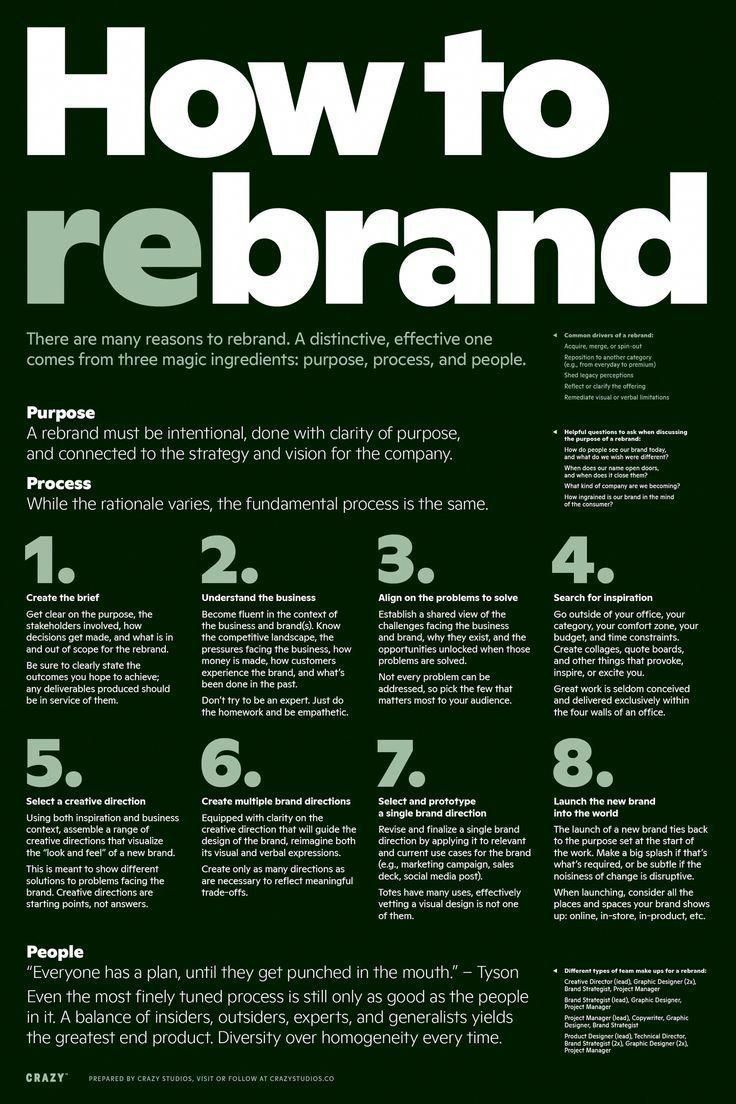
Rebranding Process Framework
Situation analysis validates rebranding necessity and defines objectives. Research current perceptions, competitive context, and strategic requirements. Clear objectives guide decisions and measure success.
Strategy development determines positioning, architecture, and expression direction. What should new brand communicate? How does it differentiate? What relationships between entities? Strategic clarity before creative development.
Creative development explores visual and verbal identity options. Naming if required; logo and identity system design; messaging frameworks. Testing with stakeholders validates directions before finalization.
Implementation planning details transition across all touchpoints. Phasing, budgeting, and responsibility assignment. Communication planning for internal and external audiences. Timeline coordination with business activities.
Luna Graphics guides Kenyan organizations through rebranding processes from strategic analysis through creative development and implementation. Our experience managing complex brand transitions ensures equity preservation while achieving strategic objectives. Contact our strategy team to discuss whether rebranding is right for your organization.
Written by Ian Love
Marketing Director
Professional contributor at Luna Graphics specializing in printing and branding solutions.