
Stationery as Brand Foundation
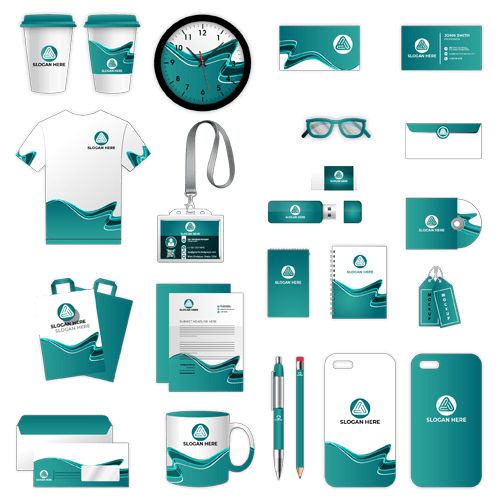
Corporate stationery—business cards, letterheads, envelopes, and complementary pieces—forms the tactile foundation of brand identity. These materials accompany every formal communication, providing physical touchpoints that reinforce (or undermine) professional credibility. In Kenyan business culture, where personal relationships and formal protocols carry significant weight, quality stationery signals organizational seriousness and attention to detail.
Despite digital communication dominance, physical stationery retains essential business functions. Business cards facilitate networking and contact exchange in contexts where digital sharing feels inappropriate or technically impractical. Formal correspondence on letterhead carries legal and ceremonial weight that email cannot match. The quality of these materials subtly influences perceptions of organizational capability and stability.
Business Cards: Compact Brand Statements
Standard Kenyan business card dimensions (85mm x 55mm) provide limited space demanding disciplined design hierarchy. Essential information includes organization name, individual name, title, contact information, and brand identity elements. Resist overcrowding—white space enhances readability and perceived sophistication.
Paper stock selection dramatically affects impression. Standard 300-350gsm cardstock provides adequate substance for economy cards; 400-450gsm premium stocks communicate weight and importance. Textured stocks (linen, felt, cotton) add tactile interest; colored stocks require careful ink selection for readability.
Printing methods balance cost against impact. Digital printing enables economical short runs and variable data (individual photo cards, multiple titles); offset printing provides superior color consistency and specialty options (metallic inks, embossing) for larger quantities. Letterpress and foil stamping create distinctive impressions for luxury positioning.
Finishing options differentiate cards from commodity printing. Rounded corners prevent dog-earing and create modern aesthetic; spot UV highlights logos or images; embossing/debossing adds dimensional texture; foil stamping provides metallic effects; die-cutting creates unique shapes. These enhancements increase cost but dramatically improve memorability.
Letterheads: Formal Communication Foundation
Letterhead design must balance brand presence with functional communication space. Standard A4 letterheads reserve top 25-30mm and bottom 15-20mm for brand elements, leaving adequate space for correspondence. Overly dominant branding appears self-important; insufficient branding misses identity reinforcement opportunity.
Paper quality for letterheads should exceed standard copier paper. 100-120gsm uncoated papers provide substance and writability; watermarked papers add security and prestige; laid or textured finishes enhance tactile experience. The paper should feed reliably through laser and inkjet printers for digital correspondence.
Security features prevent document fraud for sensitive organizations. Microprinting, security backgrounds, and specialized papers protect against alteration. Numbering systems enable document tracking. These features prove essential for financial institutions, legal practices, and government entities.
Continuation sheets (second pages) require design consistency without redundant contact information. Simplified versions with just logo and minimal branding maintain continuity while maximizing writing space. Specify continuation sheets for correspondence exceeding one page.
Envelopes: First Impression Delivery
Envelope design should align with letterhead branding while accommodating postal requirements. Window envelopes (with transparent panels showing recipient addresses) reduce addressing labor but constrain design placement. Non-window envelopes allow full-face branding but require manual or printed addressing.
Standard sizes include DL (110x220mm) for A4 tri-fold correspondence, C5 (162x229mm) for A5 or half-fold A4, and C4 (229x324mm) for unfolded A4. Custom sizes attract attention but may incur non-standard postage and handling complications.
Paper weight should provide opacity preventing content visibility while maintaining flexibility for sealing and opening. 100-120gsm papers suit standard correspondence; heavier stocks (150gsm+) convey importance for invitations or premium communications.
Sealing methods affect functionality and security. Gummed flaps require moisture activation; peel-and-seal provides convenience; security tinting prevents content visibility through envelope; tamper-evident seals protect sensitive contents.
Comprehensive Stationery Systems
| Item | Standard Specifications | Purpose |
|---|---|---|
| Business Cards | 85x55mm, 300-450gsm | Networking, contact exchange |
| Letterheads | A4, 100-120gsm uncoated | Formal correspondence |
| Continuation Sheets | A4, matching letterhead | Multi-page correspondence |
| Envelopes (DL) | 110x220mm, window/non-window | Standard correspondence |
| Envelopes (C5) | 162x229mm | Documents, brochures |
| Compliment Slips | 210x99mm (1/3 A4) | Brief notes, enclosures |
| Presentation Folders | A4 with pockets, 350-400gsm | Document organization |
| Notecards | A6 or A5, folded or flat | Personalized correspondence |
| Labels | Various sizes | Addressing, identification |
| rubber Stamps | Custom designs | Authentication, processing |
Printing Methods and Production
Offset lithography remains preferred for stationery quantities exceeding 1,000 units, providing superior color consistency, paper versatility, and specialty finishing options. The process achieves precise color matching for corporate identity programs and accommodates textured papers that challenge digital printing.
Digital production serves short runs, variable data requirements, and rapid turnaround needs. Modern digital presses achieve quality approaching offset for most applications, with particular advantages for personalized business cards or versioning for multiple office locations.
Thermography (raised printing) provides economical embossing alternative, creating tactile ink surfaces through powder application and heat activation. This traditional method adds distinction to names or logos without die costs of true embossing.
Letterpress—relief printing using raised plates and heavy pressure—creates distinctive debossed impressions favored by luxury brands and creative professionals. The physical impression into paper creates memorable tactile experience justifying premium positioning.
Paper Selection Deep Dive
Uncoated papers predominate for stationery, providing writability and professional appearance. Wood-free (virgin fiber) papers offer brightness and consistency; recycled papers support sustainability positioning with modest quality trade-offs. Laid papers with visible chain lines convey tradition and prestige.
Coated papers suit specific applications—gloss or silk finishes for presentation folders, photographic elements, or covers requiring visual impact. However, coating reduces writability, limiting use for correspondence surfaces.
Color-tinted papers require careful ink selection. Light tints (ivory, cream, soft gray) accommodate dark printing; bold colors may require white ink or foil stamping for visibility. Always verify legibility of proposed color combinations.
Specialty papers including cotton (rag content), synthetic (waterproof), and security papers serve specific requirements. Cotton papers provide archival quality and distinctive feel; synthetics suit extreme environments; security papers incorporate anti-fraud features.
Design Standards and Consistency
Brand guidelines must specify stationery standards precisely—colors (Pantone references), typography, logo placement, spacing, and prohibited modifications. These specifications ensure consistency across all applications and over time as materials are reprinted.
Hierarchy and readability govern information organization. Most important information (organization name) receives prominence; secondary information (individual details) supports without competing; tertiary information (addresses, legal text) remains accessible without dominating.
Legal and regulatory requirements affect stationery design. Company registration numbers, VAT numbers, and regulatory disclosures may be required. Verify compliance with Kenyan company law and industry-specific regulations.
Digital compatibility ensures stationery functions in hybrid workflows. Letterheads should scan clearly; business card information should OCR accurately; designs should reproduce acceptably in black and white for fax or monochrome copying.
Cost Management and Procurement
Consolidated ordering across stationery items reduces per-unit costs through shared setup and production efficiency. However, avoid over-ordering perishable items—business cards for employees who may depart, or dated letterhead designs. Balance volume discounts against obsolescence risk.
Version control for multiple locations or departments requires systematic management. Digital asset management systems track versions and ensure correct files are used for reprints. Clear naming conventions and approval workflows prevent version confusion.
Inventory management prevents stockouts of critical items while minimizing carrying costs. Establish reorder points based on usage rates and production lead times. Consider digital print-on-demand for slow-moving items or frequent updates.
Luna Graphics provides comprehensive corporate stationery services from design consultation through production and inventory management. Our brand management systems ensure consistency across all touchpoints and over time. Contact our corporate services team to develop or refresh your organization's stationery program.
Written by Ian Love
Marketing Director
Professional contributor at Luna Graphics specializing in printing and branding solutions.