
The Strategic Value of Precision Manufacturing
Businesses across industries increasingly adopt CNC cutting not merely as production method but as strategic capability enabling competitive differentiation. Precision manufacturing transcends quality metrics to impact product performance, brand perception, operational efficiency, and market positioning. Understanding why organizations invest in CNC cutting—whether through capital equipment or outsourcing partnerships—reveals broader manufacturing transformation trends reshaping Kenyan industry.
The fundamental value proposition centers on deterministic outcomes. Traditional manufacturing introduces variability through human factors, tool wear, material inconsistencies, and environmental conditions. CNC cutting minimizes these variables through digital control, automated monitoring, and process standardization. For businesses, this translates to predictable costs, consistent quality, and reliable delivery schedules essential for supply chain integration and customer commitment fulfillment.
Market evolution drives precision requirements upward. Consumer expectations for fit, finish, and functionality increase continuously. Industrial customers specify tighter tolerances for interoperability and performance. Regulatory standards in construction, safety equipment, and medical devices mandate documented precision. CNC cutting provides capability foundation meeting these escalating requirements without proportional cost increases.
Unmatched Precision and Tolerances
CNC cutting achieves mechanical precision impossible through manual methods. Industrial systems maintain positioning accuracy of ±0.025mm (0.001 inches) with repeatability within ±0.01mm. To contextualize, human hair averages 0.075mm diameter—CNC precision operates at one-third hair-width tolerances consistently. This capability enables applications previously impractical or impossible.
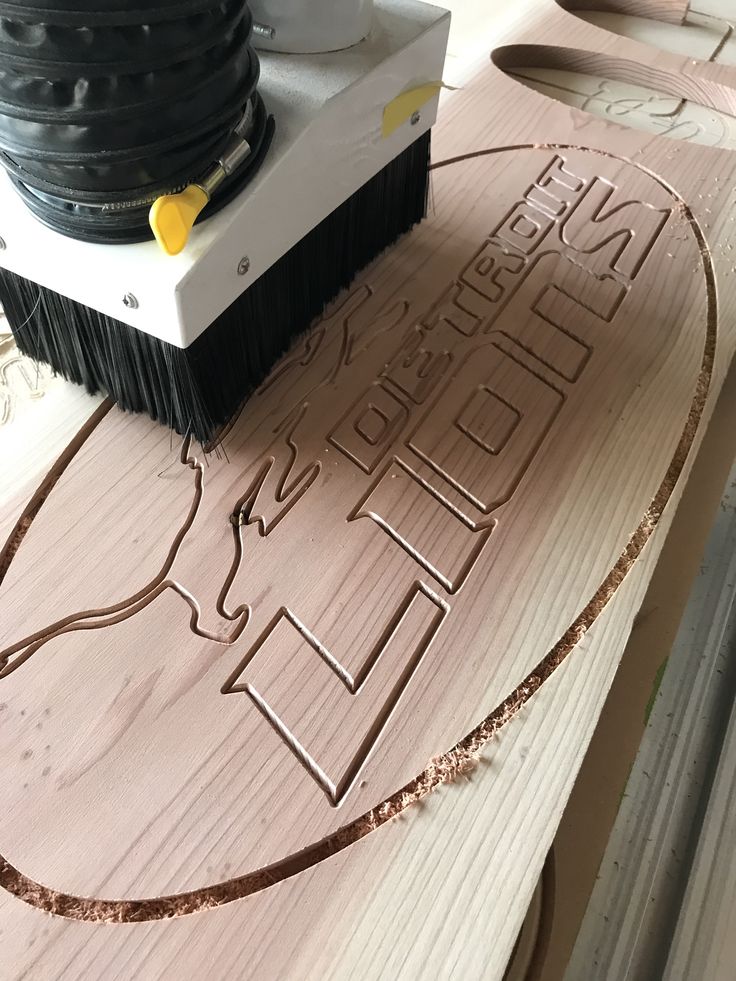
Precision benefits manifest across product categories. Furniture components achieve seamless joinery without gaps or misalignment. Architectural panels fit installation sites with minimal field adjustment. Mechanical parts interface correctly without selective assembly. Signage elements align perfectly creating professional appearance. These quality characteristics differentiate premium products from commodity alternatives in competitive markets.
Tolerance achievement extends beyond machine capability to process control. Professional CNC operations implement temperature stabilization, vibration isolation, and calibration protocols maintaining precision across production runs and environmental conditions. Statistical process control monitors output, detecting drift before tolerance violations occur. This systematic approach delivers precision reliably rather than occasionally.
Consistency at Scale: The Replication Advantage
Perhaps CNC cutting's most compelling business advantage is perfect replication—the 1,000th part matches the first exactly. Manual manufacturing inevitably introduces variation through operator fatigue, tool condition changes, and measurement errors. CNC programs execute identically regardless of production volume, time of day, or operator assignment.
Consistency enables business models depending on interchangeability. Spare parts manufacturing requires dimensional compatibility with original components. Modular construction systems depend on standardized elements fitting predictably. Product lines maintaining appearance and function across production batches build brand trust. Without replication capability, scaling production introduces quality risks threatening market position.
Quality consistency reduces downstream costs. Assembly operations proceed without fitting adjustments or rejection of non-conforming parts. Customer returns and warranty claims decrease. Brand reputation strengthens through reliable product experience. These factors compound over product lifecycles, often exceeding initial manufacturing cost considerations in business value.
Complex Geometry and Design Freedom
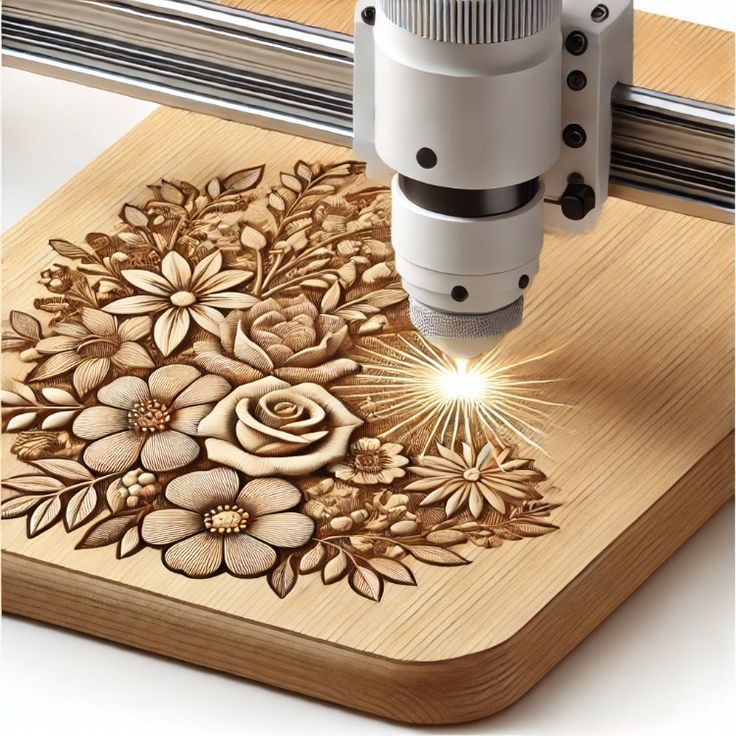
CNC cutting liberates designers from manufacturing constraints limiting traditional methods. Complex curves, intricate patterns, variable depths, and organic forms execute as readily as simple rectangles. This capability enables product differentiation through aesthetic sophistication and functional optimization impossible with conventional tools.
Design freedom manifests in multiple dimensions. Furniture designers create ergonomic contours and decorative profiling enhancing user experience and visual appeal. Architects specify custom perforation patterns, relief textures, and curved forms realizing design visions without constructability compromises. Product engineers optimize weight distribution, airflow, or structural performance through topology-informed geometries.
Rapid design iteration accelerates innovation cycles. Digital modifications implement immediately without tooling fabrication or setup changes. Prototypes evolve through multiple revisions in days rather than weeks. Market testing informs design refinement without manufacturing investment recovery concerns. This agility proves particularly valuable in trend-responsive industries like interior design and consumer products.
Operational Efficiency and Cost Structure
| Efficiency Factor | Traditional Manufacturing | CNC Cutting Advantage | Business Impact |
|---|---|---|---|
| Setup Time | Hours for jig/fixture fabrication | Minutes for program loading | Faster turnaround, lower setup costs |
| Material Yield | Standard layouts, higher waste | Optimized nesting algorithms | 15-30% material cost reduction |
| Labor Intensity | Skilled operator constant attention | Automated operation, minimal tending | Reduced labor cost, 24/7 potential |
| Rework Rate | 5-15% typical rejection | <1% with proper programming | Quality cost elimination |
| Design Change Cost | New tooling, extended delay | Software modification only | Agile response to market changes |
| Skill Dependency | Master craftspeople required | Technician-level operation | Workforce accessibility and scalability |
Operational efficiency transforms cost structures. Automated operation reduces direct labor content, though skilled programming and setup remain essential. Material optimization through software nesting decreases raw material costs significantly—particularly valuable with premium substrates like hardwoods, architectural metals, or solid surface materials. Reduced rework and scrap eliminate quality costs eroding margins in traditional manufacturing.
Speed-to-market accelerates business cycles. CNC cutting compresses lead times from design conception to finished product, enabling responsive manufacturing aligned with actual demand rather than forecast-dependent inventory. This agility supports lean inventory strategies, customization offerings, and rapid response to competitive threats or opportunities.
Integration with Digital Workflows
CNC cutting seamlessly integrates with contemporary digital design and business systems. CAD files transfer directly to CAM programming without translation errors or manual redrawing. Product lifecycle management (PLM) systems track revisions, maintain version control, and ensure production uses current specifications. Enterprise resource planning (ERP) integration enables automated scheduling, costing, and inventory management.
This integration supports data-driven manufacturing improvement. Production analytics identify bottlenecks, optimize scheduling, and predict maintenance requirements. Quality data feeds continuous improvement initiatives. Cost tracking informs pricing strategy and product mix optimization. Businesses gain manufacturing intelligence impossible with paper-based or disconnected traditional processes.
Digital thread continuity—from design intent through production to field performance—enables emerging capabilities like digital twins, predictive maintenance, and mass customization. CNC cutting serves as physical realization node in these advanced manufacturing ecosystems, translating digital models into physical reality with fidelity enabling downstream digital feedback loops.
Competitive Positioning and Market Differentiation
Businesses leveraging CNC cutting capability differentiate from competitors limited to traditional methods. Premium positioning becomes achievable through quality and complexity competitors cannot match. Customization offerings attract market segments willing to pay premiums for personalized products. Technical capability credentials support bidding for sophisticated projects requiring precision documentation.
Market expansion opportunities emerge. Export markets with stringent quality standards become accessible. OEM supply relationships requiring statistical process control and traceability become viable. High-value niche markets—medical devices, aerospace components, architectural specialties—open to qualified precision manufacturers. These opportunities typically offer superior margins and business stability compared to commodity competition.
Risk mitigation accompanies capability investment. Supply chain disruptions affect competitors dependent on manual manufacturing labor or specialized craftsmanship. CNC cutting provides production continuity through automated operation. Quality liability risks decrease through process control and documentation. Business continuity planning benefits from digital asset preservation and reproducible production methods.
Luna Graphics partners with businesses seeking precision manufacturing capabilities without capital investment burden. Our CNC cutting services provide immediate access to advanced manufacturing technology, technical expertise, and quality systems supporting competitive positioning. From prototyping through production scaling, we enable client success through manufacturing excellence. Contact our business development team to explore how precision CNC cutting advances your strategic objectives.
Written by Ian Love
Marketing Director
Professional contributor at Luna Graphics specializing in printing and branding solutions.