
The Small Business Manufacturing Dilemma
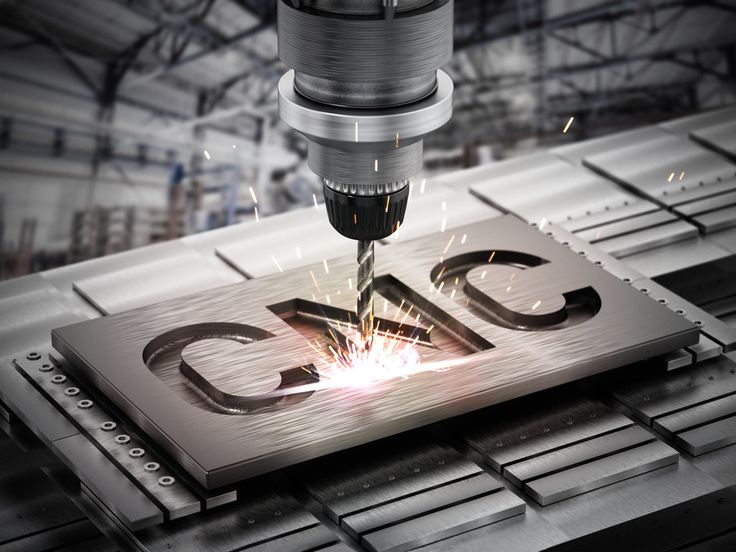
Small businesses face persistent tension between quality aspirations and resource constraints. Custom manufacturing capabilities—precision cutting, complex forming, consistent replication—historically required capital investment, specialized skills, and production volume justifying fixed costs. CNC cutting disrupts this paradigm, offering accessible precision manufacturing without traditional barriers, but requires careful evaluation to determine strategic fit and economic viability.
The fundamental question extends beyond simple cost comparison to strategic positioning. Can CNC cutting enable product differentiation, market expansion, or operational efficiency transforming business prospects? Does outsourcing provide adequate capability without capital risk, or does in-house control create competitive advantages justifying investment? These strategic considerations frame economic analysis.
Kenyan small businesses operate in dynamic markets where agility and quality increasingly determine success. CNC cutting offers both—rapid design iteration, consistent quality, and professional appearance competing with larger enterprises. However, realization of these benefits requires appropriate application, realistic expectations, and operational integration.
Cost Structure Analysis: Outsourcing vs. In-House
Outsourcing CNC cutting converts fixed costs to variable expenses, preserving capital for core business needs. Small businesses pay only for utilized capacity without equipment investment, maintenance burden, or technical staffing. Typical project costs range KES 5,000-50,000 depending on complexity—accessible for occasional needs without ongoing commitment.
However, outsourcing creates dependencies and per-unit costs that scale linearly. Provider availability may not align with urgent requirements. Design confidentiality concerns limit application for proprietary products. Per-piece costs include provider margin and overhead—at sufficient volume, in-house operation potentially reduces unit costs despite fixed cost absorption.
In-house CNC cutting requires substantial initial investment. Entry-level CNC routers suitable for wood and plastic cost KES 800,000-1,500,000. Industrial-capable machines handling diverse materials range KES 3,000,000-8,000,000. Facility requirements include adequate power (three-phase for larger machines), dust collection, and climate-controlled space. Operational costs encompass tooling, maintenance, and operator training or salary.
| Cost Factor | Outsourcing | In-House (Entry) | In-House (Industrial) |
|---|---|---|---|
| Initial Investment | Minimal | KES 800K-1.5M | KES 3M-8M |
| Per-Hour Operating Cost | KES 3,000-8,000 | KES 800-1,500 | KES 1,500-3,000 |
| Setup/Programming | Included or KES 2K-10K | Internal labor cost | Internal labor cost |
| Material Markup | 10-30% typical | Direct cost | Direct cost |
| Maintenance | None | KES 50K-150K/year | KES 200K-500K/year |
| Technical Staff | None required | Operator/trainee | Skilled technician |
| Volume Break-Even | N/A (variable only) | ~200-400 hours/year | ~600-1000 hours/year |
Strategic Value Beyond Cost Accounting
Speed to Market: CNC cutting compresses product development cycles from weeks to days. Small businesses iterate designs rapidly, test market response, and refine offerings without tooling delays. This agility proves particularly valuable in trend-responsive markets—interior design, retail display, event theming—where timing determines success.
Quality Premium: Professional CNC cutting elevates product appearance and function beyond manual methods, supporting premium pricing. Consistent precision, complex geometries, and refined finishes differentiate small business offerings from commodity competition. Customers perceive CNC-cut products as higher value, enabling margin expansion.
Capability Expansion: Access to CNC cutting enables product categories previously impractical. Custom furniture with complex joinery, architectural elements with intricate patterns, precision mechanical components—applications impossible with manual tools become viable business lines. This capability expansion diversifies revenue and reduces dependence on limited product categories.
Scalability: CNC cutting grows with business volume without proportional labor increase. Small prototypes transition to production runs using identical digital files. Quality consistency maintained from first piece to thousandth, avoiding growth-related quality degradation common in manual manufacturing.
When CNC Cutting Delivers Strong ROI
CNC cutting investment or consistent outsourcing proves particularly valuable for small businesses in specific situations:
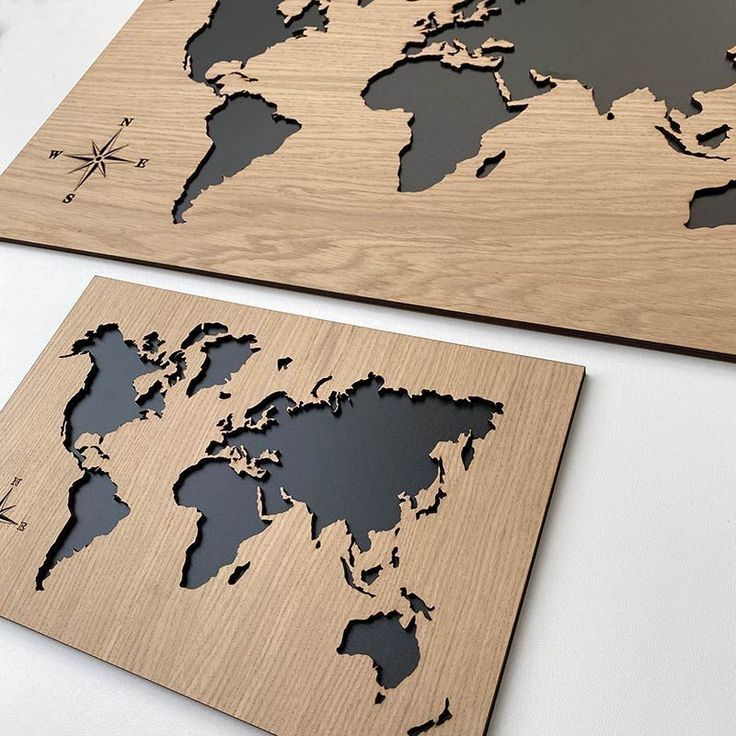
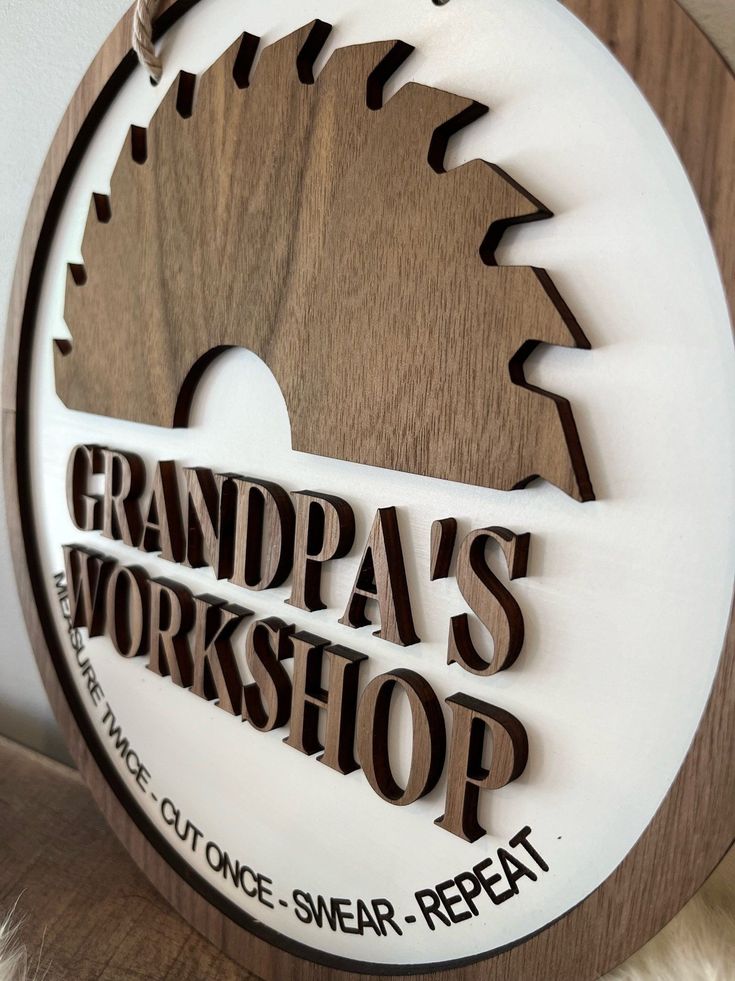
Custom Product Businesses: Companies selling made-to-order or customizable products—furniture, signage, architectural elements—leverage CNC cutting for efficient customization without custom tooling for each variation. Digital files change; physical setup remains constant.
Prototype-to-Production Ventures: Businesses developing physical products require iterative prototyping and eventual production scaling. CNC cutting serves both needs, eliminating tooling redesign between phases and enabling market testing before production commitment.
Installation and Fit-Out Contractors: Construction-related businesses utilize CNC cutting for site-specific components—custom panels, decorative screens, fitted joinery—improving quality and reducing field labor compared to site-built alternatives.
Creative and Design Studios: Designers translating concepts to physical reality require manufacturing capability. CNC cutting bridges design software and finished products, enabling portfolio development and client deliverables without manufacturing partnerships.
Volume Threshold Considerations: Economic justification strengthens with utilization. Businesses consistently requiring 20+ hours monthly of cutting services should evaluate in-house capability; sporadic needs favor outsourcing. The 200-400 annual hour threshold typically justifies entry-level equipment; 600+ hours supports industrial machine investment.
Risk Mitigation and Implementation Strategy
Start with Outsourcing: Small businesses should initially outsource CNC cutting to validate demand, refine designs, and understand capabilities before capital investment. This approach tests market response without risk, builds provider relationships, and informs future equipment specifications based on actual usage patterns.
Equipment Selection: When in-house capability justifies investment, match machine specifications to actual needs rather than aspirational capabilities. Wood-focused businesses need different machines than metalworking intentions. Bed size should accommodate 80% of projected work—outsourcing oversized requirements maintains flexibility without excessive equipment cost.
Skill Development: CNC operation requires technical competence spanning CAD/CAM software, machine operation, and maintenance. Budget training time and costs—formal training programs, online resources, or experienced operator hiring. Underestimating skill requirements common cause of underutilized equipment investment.
Financial Planning: Include all costs in investment analysis—not merely machine purchase, but installation, tooling, software, facility preparation, and working capital. Maintain contingency reserves for unexpected expenses and demand fluctuation. Consider financing options preserving cash flow, but evaluate total cost including interest.
Hybrid Approaches and Partnership Models
Many successful small businesses utilize hybrid models—maintaining in-house capability for standard work while outsourcing specialized requirements (large format, exotic materials, complex 3D). This approach optimizes capital efficiency, accessing advanced capabilities without full investment.
Partnership arrangements with CNC service providers offer intermediate solutions. Contract manufacturing agreements secure capacity and pricing for growing volume. Technical collaboration improves designs for manufacturability, reducing costs and improving quality. Some providers offer equipment leasing or pay-per-use arrangements reducing capital barriers.
Cooperative models—shared equipment among non-competing businesses, maker space memberships, or industry association resources—provide access without individual investment. These arrangements suit businesses with sporadic needs or capital constraints, though scheduling flexibility and capacity availability may limit utility.
Luna Graphics supports small business CNC cutting needs through flexible service models scaling from prototype to production. Our consultation services help evaluate in-house versus outsourcing decisions, while our manufacturing capabilities provide professional quality without capital investment. Contact our business development team to discuss your specific situation and discover how CNC cutting advances your small business objectives.
Written by Ian Love
Marketing Director
Professional contributor at Luna Graphics specializing in printing and branding solutions.