
Glass as Branding Canvas
Glass surfaces represent valuable real estate for branding, privacy control, and environmental design. Windows, doors, and interior glass partitions offer visibility, light transmission, and architectural presence that solid walls cannot match. Large format printing transforms these transparent surfaces into communication channels while preserving or modifying their optical properties.
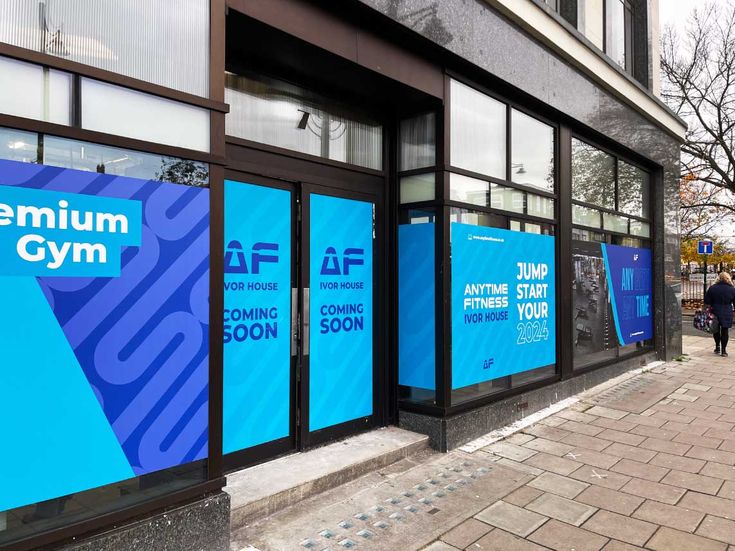
Applications span exterior storefront identification, vehicle windows, office privacy screening, promotional messaging, and decorative enhancement. Material selection determines whether graphics prioritize visibility (seeing through glass), privacy (blocking views), or illumination (backlit effects).
Perforated Window Film (Window Perf)
Perforated window film creates one-way visibility—exterior graphics visible to outside viewers while interior occupants see through to outside. Tiny holes (typically 1.5mm diameter) cover 30-50% of film surface, with graphic printing on solid portions.
Perforation ratios balance image quality against visibility. 50/50 perf (50% open) offers best see-through but reduced image vibrancy; 60/40 improves image density while maintaining reasonable visibility; 70/30 maximizes graphic impact with limited see-through. Selection depends on lighting conditions—brighter exteriors improve see-through; darker interiors reduce visibility.
Applications include vehicle rear windows (legal visibility requirements), storefront graphics maintaining interior natural light, and building wraps on curtainwall structures. UV-resistant formulations prevent fading; black backing improves opacity.
Installation considerations include: wet application preventing bubble formation; edge sealing preventing water infiltration; avoiding windshield areas on vehicles (legal restrictions); and accounting for interior lighting effects on appearance.
Frosted and Etched Glass Films
Frosted vinyl simulates sandblasted or acid-etched glass at fraction of cost and permanence. These translucent films diffuse light while obscuring detailed views, creating privacy without complete opacity. Premium cast films offer clarity and durability exceeding calendared alternatives.
Applications include office conference room privacy, retail changing areas, bathroom windows, and decorative architectural elements. Patterns range from uniform frost to gradients, stripes, or custom designs.
Etched glass effects utilize plotter-cut or printed patterns suggesting traditional craftsmanship. Company logos, decorative motifs, or text elements appear as though carved into glass surface. Multi-layer applications combine frosted backgrounds with clear graphic elements.
Installation requires meticulous surface preparation—glass must be absolutely clean and free of residue. Wet application enables repositioning; squeegee technique prevents bubble formation. Removal within warranty period (typically 5-7 years) ensures clean release.
Transparent and Translucent Films
Clear vinyl with transparent printing maintains glass clarity while adding color and imagery. Applications include stained glass effects, brand color tinting, and subtle graphic elements. White ink underlayment creates opacity for specific design elements while maintaining transparency elsewhere.
Translucent films optimize backlit applications. Lightbox films diffuse illumination evenly; colored translucent vinyls create glowing brand colors when illuminated from behind. These materials suit retail window displays, transit shelters, and architectural lighting features.
UV-blocking films combine branding with functional benefits. These materials reduce solar heat gain and fading while displaying graphics. Retail environments and vehicle applications benefit from dual-purpose functionality.
Opaque and Blockout Graphics
Opaque vinyl completely blocks light and views, essentially converting windows to solid signage surfaces. Applications include construction site hoardings, temporary space closures, and complete privacy requirements. Blockout layers prevent show-through in double-sided applications.
Removable opaque films serve temporary campaigns without permanent alteration. These products adhere securely but remove cleanly within specified periods, ideal for leased retail spaces and promotional windows.
Design Considerations for Window Graphics
Viewing context determines design approach. Exterior graphics viewed from moving vehicles require bold, simple elements; interior graphics viewed from pedestrian distance accommodate detail. Lighting conditions—day/night, interior/exterior illumination—affect visibility and may require different designs for optimal 24-hour appearance.
Color selection accounts for glass tinting. Clear glass transmits colors accurately; tinted glass (common in modern buildings) shifts color perception. Blue-tinted glass makes blues recede and yellows advance; gray tint reduces overall saturation.
Scale and proportion must suit viewing angles. Tall buildings viewed from street level require vertical compression compensation; graphics appear stretched when viewed from below unless designed with foreshortening.
Installation and Maintenance
Surface preparation is critical—glass must be cleaned with alcohol or specialized solutions removing all oils and residues. Temperature requirements (15-30°C) ensure adhesive flow. Wet application using soapy water enables positioning before final adhesion.
Large graphics require paneling with precise seam alignment. Registration marks ensure continuity across multiple sections. Professional installers utilize specialized tools: squeegees, heat guns for conforming to curves, and precision cutting blades.
Maintenance involves gentle cleaning with non-abrasive materials. Avoid ammonia-based cleaners attacking adhesives; isopropyl alcohol suits most cleaning needs. Inspect edges periodically for lifting, addressing immediately to prevent water infiltration.
Regulatory and Safety Considerations
Building codes may restrict window coverage percentages for safety (egress visibility) or historic preservation. Vehicle window graphics must maintain legal visibility requirements—typically rear window perforation patterns ensuring mirror visibility.
Glass safety films provide shatter resistance alongside branding. These products hold glass fragments upon breakage, reducing injury risk. Combined branding/safety films serve dual purposes in vulnerable locations.
Cost Structures
Window graphic pricing depends on material type, coverage area, and complexity. Perforated window film costs KES 1,500-3,000 per square meter installed. Frosted films range KES 2,000-4,000/sqm. Complex plotter-cut designs add labor costs for weeding and application tape preparation.
Vehicle window graphics typically range KES 5,000-15,000 depending on coverage and vehicle type. Large architectural installations require site surveys and engineering consultation affecting project costs.
Luna Graphics provides comprehensive window graphic solutions including material specification, design optimization for glass applications, and professional installation. Our portfolio includes vehicle fleets, retail chains, and corporate office implementations. Contact our glass branding specialists for project consultation.
Written by Ian Love
Marketing Director
Professional contributor at Luna Graphics specializing in printing and branding solutions.