
Construction and Material Differences
Mesh banners and solid banners serve similar communication purposes but differ fundamentally in physical construction. Solid banners utilize continuous vinyl film—typically 300-600gsm PVC—with complete surface coverage providing maximum print area and image continuity. Mesh banners incorporate perforated construction with thousands of tiny holes (typically 30-50% open area) creating permeable surfaces allowing air passage.
This structural distinction determines performance characteristics across wind resistance, image quality, weight, and application suitability. Neither type is universally superior; optimal selection depends on specific environmental conditions, size constraints, and visual requirements.
Wind Resistance and Structural Loading
Mesh banners provide superior wind performance through pressure equalization. Wind forces passing through perforations rather than pushing against solid surfaces reduce structural loading by 70-80%. This permeability enables larger installations without reinforcement, reduces anchor point stress, and minimizes flapping noise and material fatigue.
Solid banners in windy environments require wind slits (half-moon cuts) or reinforcement to prevent tearing. Even with slits, solid banners catch significant wind force, necessitating robust mounting hardware and limiting maximum practical size. Building wraps and large facade banners almost exclusively utilize mesh construction.
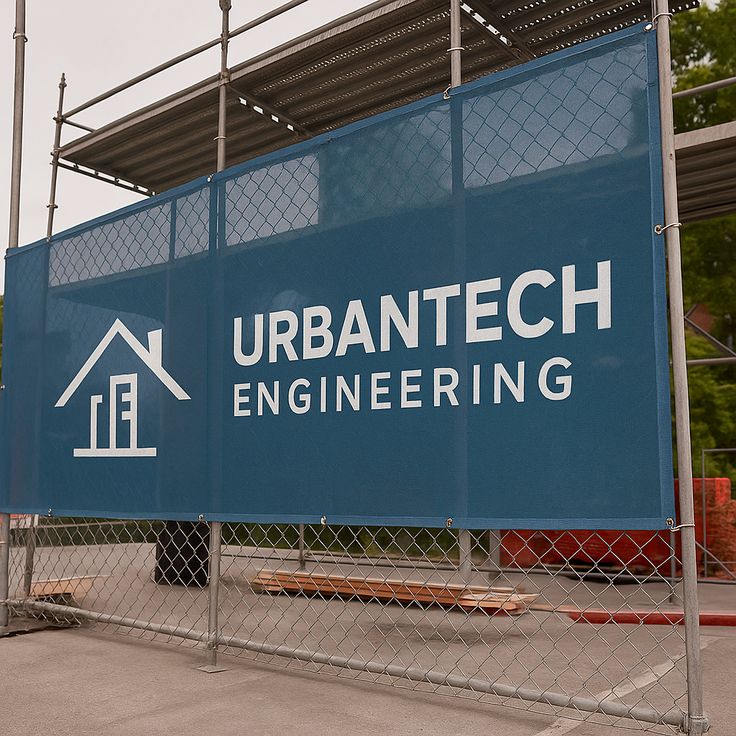
Engineering calculations for temporary structures often mandate mesh materials above specific size thresholds. Event tents, scaffolding banners, and construction site hoardings typically require mesh to meet safety regulations and structural engineering standards.
Image Quality and Visual Impact
Solid banners offer superior image reproduction due to continuous print surfaces. Photographic imagery, fine text, and detailed graphics render sharply without interruption. Backlit applications (where banners illuminate from behind) require solid translucent materials; mesh construction creates uneven lighting and visible hole patterns.
Mesh banners sacrifice some image clarity for functional benefits. Viewed from distance (>10 meters), perforations become imperceptible and images appear solid. Close inspection reveals dot pattern affecting fine detail reproduction. Solid color areas may show slight texture from perforation pattern.
Viewing distance thus determines acceptable mesh quality. Highway billboards viewed from 50+ meters utilize mesh without perceptible quality loss. Trade show displays viewed from 2-3 meters require solid materials for professional appearance.
Weight and Handling Characteristics
Mesh construction reduces material weight 20-30% compared to equivalent solid vinyl. This weight reduction benefits large installations requiring manual handling, reduces shipping costs, and decreases structural support requirements. A 50 square meter mesh banner weighs approximately 15-20kg versus 25-35kg for solid equivalent.
Flexibility and packability favor mesh for frequent deployment. Mesh rolls compactly without creasing concerns affecting solid vinyl. Transportation and storage efficiency particularly benefits event companies and mobile marketing applications.
Installation ease improves with lighter weight, especially for elevated or difficult-access locations. Reduced physical strain on installers and lower wind loading during installation enhance safety.
Durability and Lifespan
Both materials offer comparable UV resistance and weathering when utilizing premium formulations. Mesh construction may show slightly accelerated edge fraying if not properly hemmed and reinforced. Solid banners experience greater wind fatigue at attachment points due to higher stress concentrations.
Cleaning and maintenance differ between types. Solid surfaces clean easily with standard methods. Mesh requires attention to prevent debris accumulation in perforations, which can affect appearance and airflow. Pressure washing mesh risks edge damage.
Typical outdoor lifespan ranges 2-3 years for economy grades, 3-5 years for premium materials, regardless of mesh or solid construction. Indoor applications extend lifespan indefinitely for both types.
Cost Comparison
Mesh banner production costs 10-20% premium over solid vinyl due to specialized manufacturing and lower production volumes. However, total project costs often favor mesh when considering structural requirements. Solid banners requiring reinforced frames, additional anchor points, or wind-proofing modifications may exceed mesh costs substantially.
Installation cost differences can be significant. Mesh installation in windy locations requires less labor and hardware than solid equivalent. Engineering and permit costs for large solid banners may exceed material savings.
Application Guidelines
Choose mesh banners for: outdoor applications exceeding 20 square meters, locations with wind exposure >20 km/h, building wraps and scaffolding banners, fence banners, temporary event structures, and applications where weight reduction benefits handling.
Choose solid banners for: indoor applications requiring premium appearance, backlit or illuminated displays, close-viewing situations (<5 meters), small outdoor applications (<10 square meters) in protected locations, and photographic imagery requiring maximum detail reproduction.
Hybrid and Specialized Options
Micro-perf mesh (60/40 or 70/30 open area) balances wind resistance with image quality for critical applications. These fine perforations reduce airflow less than standard mesh but improve appearance at closer distances.
Blockout mesh incorporates opaque layers enabling double-sided printing without show-through. This construction suits fence banners and hanging displays requiring visibility from both directions.
Luna Graphics produces both mesh and solid banners across all quality grades. Our technical team assesses installation environments recommending optimal construction for performance and value. Wind load calculations and structural consultation available for large or complex installations. Contact us for application-specific guidance.
Written by Ian Love
Marketing Director
Professional contributor at Luna Graphics specializing in printing and branding solutions.