
Real Estate Marketing Requirements
Real estate marketing demands large format solutions spanning development phases: pre-construction site identification; construction progress hoardings; sales center environments; and property management branding. Each phase requires specific graphic applications balancing regulatory compliance, brand building, and sales effectiveness.
The extended timelines of real estate projects (2-5 years typical) require durable materials and flexible update capabilities. Graphics must withstand weathering, permit changes, and marketing message evolution while maintaining premium appearance appropriate to property positioning.
Development Site Signage
Site identification signage establishes presence and complies with municipal requirements. These typically include: project name and developer branding; contact information; and regulatory notices (permits, safety). Materials must withstand construction environment dust and vibration.
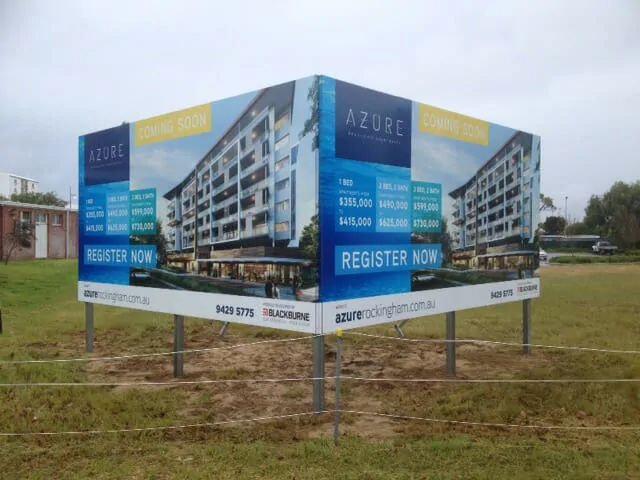
Hoarding graphics (construction site barriers) transform eyesores into marketing opportunities. Large format prints on rigid substrates or tensioned fabric cover plywood hoardings, presenting project renderings, amenity highlights, and sales information. These massive displays (often 50+ meters length) create presence in urban environments.
Directional signage guides prospects to sales centers from main roads. These wayfinding systems require municipal approval and must withstand outdoor exposure for extended periods.
Sales Center Environments
Sales centers serve as physical showrooms requiring immersive branding: reception and welcome areas; scale model surrounds with project context graphics; amenity walls illustrating lifestyle benefits; and floor plan displays with unit-specific information.
Interactive elements combine print with technology: touchscreens surrounded by printed context graphics; QR codes linking to virtual tours; and augmented reality triggers integrated with environmental graphics.
Finishes and materials must suggest project quality level. Luxury developments justify premium substrates (acrylic, metal, fabric); mass market projects balance impact with cost efficiency.
Property Launch and Event Graphics
Launch events require temporary graphics: red carpet backdrops; step-and-repeat banners for photography; directional and parking signage; and branded environments (tents, lounges). These create occasion and generate media content.
Model unit staging utilizes large format for: window privacy treatments; feature walls suggesting customization options; and informational graphics highlighting specifications and finishes.
Strategic Brand Building
Developer brand identity extends across multiple projects. Consistent graphic systems create portfolio recognition: signature colors and typography; recurring visual motifs; and standardized signage formats adapted to specific sites.
Community integration graphics address neighborhood concerns and build goodwill: project timelines showing completion milestones; community benefit announcements; and construction activity updates. These reduce opposition and build anticipation.
Material and Production Considerations
Extended outdoor exposure requires: UV-stable materials preventing fade; rigid substrates resisting wind load; and secure mounting preventing theft or vandalism. Premium hoarding graphics may utilize aluminum composite or tensioned fabric systems.
Update flexibility accommodates: phase changes (sold out, new release); pricing updates; and regulatory modifications. Modular systems or replaceable panels enable changes without complete replacement.
Luna Graphics serves Kenya's leading developers with comprehensive real estate marketing solutions. Our portfolio includes residential, commercial, and industrial projects across price points. Contact our property marketing specialists to enhance your development visibility.
Written by Ian Love
Marketing Director
Professional contributor at Luna Graphics specializing in printing and branding solutions.