
Rigid Substrates for Professional Displays
Rigid board printing provides structural integrity that flexible materials cannot match, enabling freestanding displays, durable signage, and dimensional presentations. Foam board and PVC (polyvinyl chloride) board represent the two primary categories for these applications, each offering distinct advantages and limitations. Understanding their characteristics ensures appropriate selection for specific project requirements, budget constraints, and durability expectations.
The fundamental difference lies in material construction and longevity. Foam board provides lightweight, economical solutions for temporary or indoor applications. PVC board offers superior durability, weather resistance, and longevity for demanding applications. Choosing between them requires honest assessment of actual needs rather than defaulting to lowest cost or maximum durability.
Foam Board: Lightweight and Economical
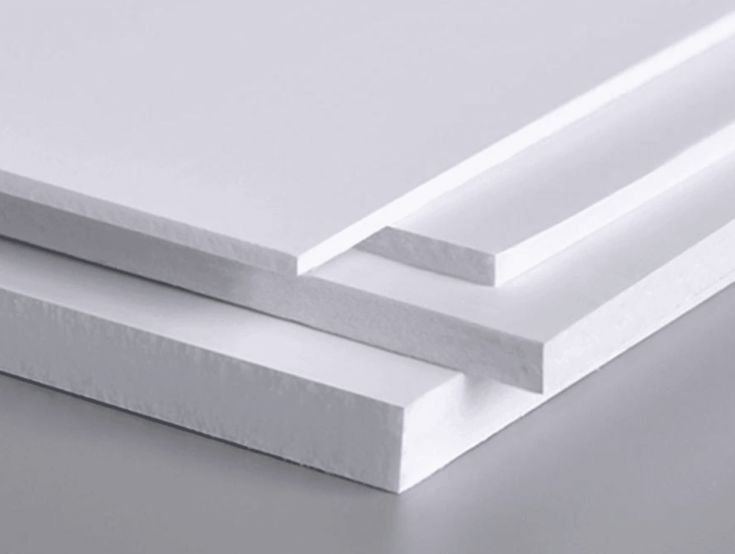
Foam board—also called foamcore or Kapa mount—consists of polystyrene foam core laminated between paper or plastic facings. This construction creates rigid, lightweight panels ideal for temporary displays, presentation boards, and short-term signage. The material cuts cleanly with standard blades, enabling easy shaping and mounting.
Paper-faced foam board provides the most economical option for indoor applications. The clay-coated paper surface accepts printing beautifully, producing vibrant graphics for presentations, exhibition panels, and retail displays. However, the paper facing is vulnerable to moisture, edge damage, and bending stress that creases the foam core.
Plastic-faced foam board offers improved moisture resistance and durability over paper-faced versions. The plastic surface—typically polystyrene or polyester—provides wipeable, more robust facing suitable for environments where occasional moisture or handling occurs. This upgrade proves worthwhile for exhibition graphics subject to repeated handling or installation.
Self-adhesive foam board incorporates pressure-sensitive adhesive on one side, simplifying mounting of prints or photographs. This convenience adds cost but reduces labor and skill requirements for display preparation, valuable for high-volume production or unskilled installation teams.
PVC Board: Durable and Weather-Resistant
Expanded PVC board—trade names including Forex, Celtec, and Palight—provides cellular PVC construction with solid, smooth surfaces. Unlike foam board's laminated construction, PVC board is homogeneous material throughout, providing consistent properties and superior durability.
The material's closed-cell structure resists water absorption, making it suitable for outdoor applications and humid environments. PVC board doesn't warp, delaminate, or degrade when wet, maintaining appearance and structural integrity through weather exposure that destroys foam board.
Surface hardness resists denting and impact damage. While foam board dents permanently from moderate impacts, PVC board withstands handling, transportation, and installation stresses that would damage lighter materials. This durability justifies higher costs for applications requiring longevity or repeated use.
Density variations offer options balancing weight and rigidity. Low-density PVC (0.5-0.6 g/cm³) provides lighter weight for large displays where weight matters. High-density formulations (0.7-0.9 g/cm³) offer maximum rigidity for structural applications or high-wind environments.
Comparative Analysis for Decision Making
| Characteristic | Foam Board | PVC Board |
|---|---|---|
| Weight | Very lightweight | Moderate (2-3x foam board) |
| Cost (per sqm) | KES 400-700 | KES 1,200-2,500 |
| Indoor Durability | Months to 1 year | 5-10 years |
| Outdoor Durability | Not suitable | 3-5 years (UV dependent) |
| Moisture Resistance | Poor (paper faced) | Excellent |
| Impact Resistance | Poor; dents easily | Good; resilient |
| Cutting/ Fabrication | Easy; hand tools | Requires power tools |
| Printing Compatibility | Excellent | Excellent |
| Mounting Options | Light duty only | Structural possible |
| Recyclability | Limited | Recyclable (type 3) |
Application Guidelines by Use Case
Presentation and exhibition displays for single events favor foam board for economy and light weight. Conference posters, temporary exhibition panels, and presentation boards that serve for days or weeks don't require PVC durability. The weight savings ease transport and installation, while low cost allows disposal after use rather than storage.
Retail point-of-purchase displays balance durability needs against cost. Short promotional campaigns (1-3 months) may use foam board with proper handling; longer campaigns or high-traffic locations warrant PVC investment. Consider handling frequency—displays touched by customers require PVC resilience.
Outdoor signage demands PVC board or equivalent weather-resistant materials. Foam board absorbs moisture, warps, and degrades rapidly outdoors. Even temporary outdoor applications require PVC or specialized outdoor foam boards with plastic facings and moisture-resistant cores.
Architectural and construction site signage requires PVC durability. These applications face weather, rough handling, and extended exposure that foam board cannot survive. The investment in PVC pays through longevity and maintained professional appearance.
Printing and Finishing Considerations
Both materials accept various printing technologies. Direct UV printing provides excellent adhesion and durability on both substrates, creating scratch-resistant graphics integrated with the surface. UV printing on PVC creates particularly durable outdoor graphics.
Mounting printed vinyl or paper graphics to board surfaces provides alternative production methods. Pressure-sensitive adhesive (PSA) mounting or wet mounting techniques apply graphics to prepared boards. This approach enables production on materials not suitable for direct printing and facilitates graphic changes on reusable boards.
Lamination extends foam board life and provides surface protection. Gloss or matte laminates protect printed surfaces from handling damage and moisture. Edge sealing prevents moisture ingress that causes delamination—critical for foam board longevity even in indoor applications.
Edge finishing affects appearance and durability. Raw foam board edges show the characteristic foam and paper sandwich construction. PVC board edges can be finished smoothly or routed for decorative profiles. Edge banding or painting improves foam board appearance for premium applications.
Cost Analysis and Value Engineering
Initial material cost differences are substantial—PVC board costs 3-4x foam board equivalents. However, total project cost analysis should include longevity, handling requirements, and replacement frequency. Foam board requiring replacement three times may exceed PVC costs while delivering inferior appearance throughout.
Transport and installation costs favor foam board's light weight. Large displays that require multiple handlers in PVC might be manageable by one person in foam board. For touring exhibitions or frequent relocation, weight savings may justify foam board despite durability limitations.
Storage considerations affect reusable display programs. Foam board requires careful flat storage to prevent warping; PVC board is more forgiving of storage conditions. If displays will be stored between uses, PVC may prove more economical through reduced damage during storage.
Environmental and Safety Considerations
Foam board production involves polystyrene, a petroleum-based material with limited recycling options in Kenya. The material is not biodegradable and requires landfill disposal. Paper facing may be recyclable if separated from foam core, though practical recycling is limited.
PVC production raises environmental concerns regarding chlorine chemistry and plasticizer use. However, PVC board's longevity means less frequent replacement and associated production impacts. At end of life, PVC is technically recyclable (resin code 3), though recycling infrastructure is limited.
Both materials burn readily and require fire safety consideration for indoor applications. Some formulations include fire retardants for code compliance; verify specifications for public venue applications.
Luna Graphics provides both foam board and PVC board solutions with expert consultation on optimal selection. We evaluate your specific requirements—duration, environment, handling, and budget—to recommend appropriate substrates. Contact our display specialists for samples and project-specific recommendations.
Written by Ian Love
Marketing Director
Professional contributor at Luna Graphics specializing in printing and branding solutions.