
The Role of CNC Cutting in Product Development
Product prototyping bridges conceptual design and manufactured reality, validating form, fit, function, and market appeal before production commitment. CNC cutting serves this critical phase exceptionally, transforming digital designs into physical prototypes with speed, precision, and material versatility. Unlike additive manufacturing (3D printing) with limited materials and anisotropic properties, CNC cutting produces prototypes from production-intent materials with structural integrity and surface finish representative of final products.
The prototyping process typically iterates through concept models (communication and form study), functional prototypes (mechanical verification), and pre-production prototypes (manufacturing validation). CNC cutting serves all stages with appropriate materials and finishing, enabling comprehensive validation before tooling investment.
Kenyan product developers, from startups to established manufacturers, leverage CNC cutting for competitive advantage in product development. This guide examines prototyping-specific CNC applications and best practices.
Concept and Appearance Models
Form Study Models: Early-stage prototypes evaluate aesthetic concepts, ergonomic factors, and visual proportion. CNC cutting from foam, wood, or styling clay (Renshape, polyurethane foam) produces models quickly for design review. These models need not be functional but must accurately represent intended form.
Appearance Prototypes: High-fidelity models simulating final product appearance for stakeholder presentation, photography, or market research. CNC cutting from production-intent materials (plastics, metals, wood) with appropriate finishing (painting, texturing, graphics) creates prototypes indistinguishable from production units in photographs or display.
Ergonomic Validation: Physical models enable user interaction assessment—grip comfort, control accessibility, weight distribution. CNC cutting produces representative geometry for user testing, informing design refinement before engineering freeze.
| Prototype Stage | Materials | CNC Approach | Validation Purpose |
|---|---|---|---|
| Concept model | Foam, Renshape, wood | Fast cutting, rough finish | Form, proportion, concept |
| Appearance model | Production materials | Precision, fine finish | Aesthetics, marketing, photos |
| Functional prototype | Engineering materials | Tight tolerances | Mechanical function, fit |
| Engineering prototype | Final materials | Production methods | Performance, durability |
| Pre-production | Production processes | Manufacturing validation | Tooling, assembly, cost |
Functional Prototyping
Mechanical Verification: Prototypes testing mechanical function—moving parts, load bearing, assembly sequences. CNC cutting produces components from engineering materials (aluminum, steel, engineering plastics) with tolerances enabling functional testing. Iterative refinement addresses performance issues before production tooling.
Fit and Assembly: Multi-component products require fit validation—clearances, tolerances, assembly sequences. CNC cutting produces prototype components representing production geometry, identifying interferences, tolerance stack-up issues, and assembly difficulties.
Structural Testing: Load-bearing components prototype in structural materials for strength testing. CNC cutting from aluminum, steel, or composites produces test articles validating structural analysis and identifying failure modes.
Material Selection for Prototypes
Representation vs. Performance: Material selection balances representation of final product properties against prototyping practicalities. Production materials ideal but may machine slowly or require specialized equipment; surrogate materials enable faster iteration with acceptable property representation.
Common Prototyping Materials:
- Polyurethane Foam (Renshape, Obomodulan): Easy machining, stable, paintable. Ideal for appearance models and form studies. Various densities from 300-1200 kg/m³.
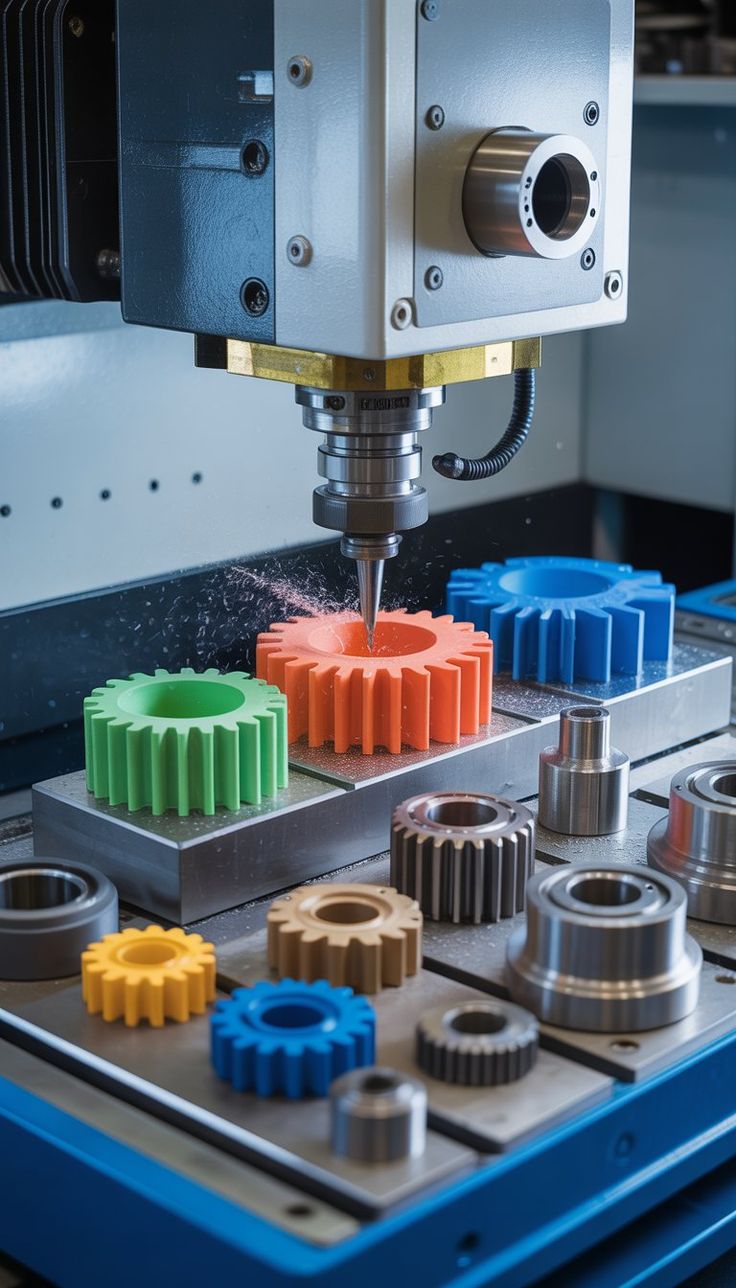
- ABS, Delrin, Nylon: Engineering plastics representing injection-molded parts. Machine cleanly; test mechanical properties; finish to production appearance.
- Aluminum: Represents die-cast or machined metal parts. Good machinability; actual material properties for structural testing.
- Tooling Board (epoxy, polyurethane): High-density boards (1000-1500 kg/m³) with excellent dimensional stability and surface finish. Premium appearance models and master patterns.
- Wood/MDF: Economical for large models or paint-grade appearance. Less dimensionally stable than synthetic materials.
Rapid Iteration Strategies
Design Modification Speed: CNC cutting enables rapid iteration—design changes implement same-day or next-day with new cutting files. This speed supports design exploration impossible with tooling-dependent processes. Multiple design variations test simultaneously; market feedback informs rapid refinement.
Modular Prototyping: Design prototypes with modular components enabling isolated revision. Changing one feature doesn't require remaking entire prototype; component interchangeability supports comparative evaluation.
Hybrid Prototyping: Combine CNC cutting with other processes—3D printing for complex internal geometry, CNC for external precision; hand fabrication for unique elements, CNC for repetitive features. Optimize approach by feature requirements.
From Prototype to Production
Design for Manufacturing Feedback: CNC prototyping reveals manufacturing challenges—undercuts preventing mold release, thin sections difficult to fill, complex assemblies requiring simplification. Early identification of manufacturing issues prevents expensive tooling revisions.
Tooling Patterns: High-quality CNC prototypes serve as patterns for tooling—casting masters, vacuum forming molds, or inspection fixtures. Precision prototypes enable soft tooling for initial production before hard tooling commitment.
Test Marketing: Appearance prototypes support market research—customer preference studies, pricing evaluation, distribution channel assessment. Physical products generate feedback impossible from renderings alone.
Regulatory and Certification: Prototypes undergo testing for safety certification, EMC compliance, or industry standards. CNC-produced test articles from appropriate materials provide valid certification testing.
Cost and Time Considerations
Prototype Economics: While unit costs higher than production, prototyping eliminates tooling investment risk and enables market validation before major commitment. CNC prototyping costs typically 1-10% of tooling investment—reasonable insurance against product failure.
Timeline Planning: CNC prototyping compresses development timelines from months to weeks. Rapid iteration enables more design cycles within fixed schedule, improving final product quality. Parallel activities—prototyping while completing engineering—optimize schedule.
Intellectual Property: Prototypes represent valuable IP requiring protection. Confidentiality agreements with prototyping providers; controlled access to prototypes; documentation security protect competitive advantage.
Luna Graphics supports product developers with CNC prototyping services from concept models through pre-production validation. Our rapid turnaround, material variety, and finishing capabilities enable comprehensive product development. Contact our prototyping specialists to accelerate your product development cycle.
Written by Ian Love
Marketing Director
Professional contributor at Luna Graphics specializing in printing and branding solutions.