
Banner Applications and Types
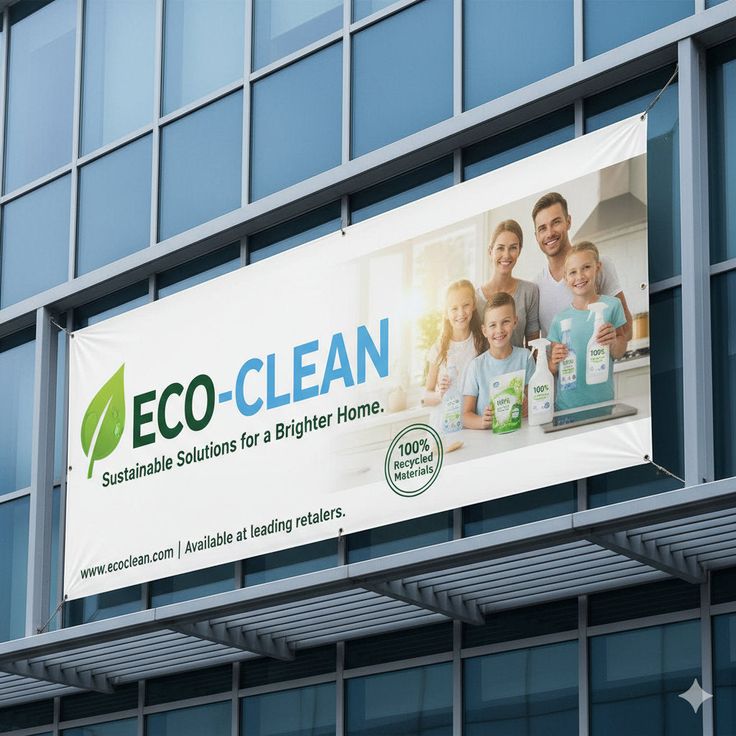
Banners represent the most ubiquitous large format application, serving temporary signage, event promotion, retail advertising, and directional guidance. Their portability, relatively low cost, and installation versatility make banners essential for marketing campaigns, trade shows, grand openings, and seasonal promotions. Understanding banner types enables appropriate specification for specific applications.
Vinyl banners dominate outdoor and heavy-duty applications. Frontlit vinyl provides excellent print surface and durability for general use. Mesh vinyl reduces wind loading for large installations or exposed locations. Backlit vinyl enables illuminated displays for nighttime visibility. Material weight (measured in grams per square meter or ounces per square yard) indicates durability—300-400gsm suits short-term use; 500-600gsm provides extended outdoor life.
Fabric banners offer aesthetic refinement for indoor applications. Polyester poplin provides wrinkle-resistant, opaque display surface. Satin fabrics create elegant, light-reflective presentations. Canvas textures suggest artistic quality for upscale environments. Fabric's light weight and packability benefit travel and repeated use.
Retractable banner stands combine printed graphics with portable hardware. Standard sizes (850mm x 2000mm typical) suit trade show booths, retail environments, and presentation backdrops. Premium stands feature adjustable height, interchangeable cassettes, and wheeled cases. Economy options provide single-use value for limited budgets.
Material Specifications and Selection
Vinyl banner grades balance cost against durability. Economy calendared vinyl (monomeric plasticizers) suits short-term applications (3-6 months) with limited flexibility and UV resistance. Premium cast vinyl (polymeric plasticizers) maintains flexibility and colorfastness 3-5 years outdoors. Scrim reinforcement (interwoven polyester fibers) prevents tearing and extends lifespan.
Coating technologies affect print quality and durability. Gloss coatings enhance color vibrancy but create glare under direct lighting. Matte finishes reduce reflections and suggest sophistication. Fluorescent coatings increase visibility for safety applications. Anti-graffiti treatments enable cleaning of vandalized surfaces.
Environmental factors dictate material selection. Coastal environments with salt spray require corrosion-resistant grommets and edge reinforcement. High-wind locations necessitate mesh construction or wind slits. Extreme temperature ranges demand flexible formulations resisting brittleness in cold and sagging in heat.
Design Principles for Banner Effectiveness
Viewing distance determines design complexity. Banners viewed from moving vehicles require minimal text (under 7 words), large fonts (minimum 100mm height for highway viewing), and high-contrast color schemes. Pedestrian-viewed banners accommodate more detail but still benefit from simplicity and focal point hierarchy.
Color psychology influences message reception. Red creates urgency suitable for sales promotions. Blue conveys trust appropriate for professional services. Yellow attracts attention for safety messaging. Brand color consistency maintains identity recognition across marketing materials.
Typography choices affect readability. Sans-serif fonts (Arial, Helvetica, Futura) prove most legible at distance. Script and decorative fonts suit elegant contexts but sacrifice readability. Stroke weight should be heavy enough to maintain visibility against complex backgrounds or when backlit.
Finishing and Hardware Options
Hemming reinforces banner edges preventing tearing. Single-fold hems with stitching or welding suit most applications. Double-fold hems provide additional strength for large banners or high-wind exposure. Rope hems incorporate cord for enhanced tear resistance.
Grommet installation enables rope or bungee attachment. Standard spacing (every 300-400mm) distributes load evenly. Corner grommets require particular reinforcement as stress concentrates at these points. Brass or stainless steel grommets resist corrosion; nickel-plated options provide economy.
Pole pockets create sleeve openings for rigid support poles. Top and bottom pockets enable tensioning between poles; side pockets suit vertical hanging. Pocket sizing must accommodate pole diameter plus fabric thickness. Double-stitched pockets prevent pole abrasion damage.
Wind management features reduce structural loading. Wind slits (half-moon cuts) interrupt airflow across banner surfaces. Mesh construction permits air passage while maintaining image visibility. Tensioning systems (cables, springs) absorb wind gusts preventing anchor failure.
Installation and Hanging Systems
Wall mounting utilizes screws through grommets or adhesive hanging systems. Masonry walls require anchors; wood or metal studs enable direct screw attachment. Tensioning systems maintain flat appearance preventing sagging. Magnetic mounting suits steel surfaces enabling repositioning.
Freestanding systems include A-frames, X-stands, and telescopic poles. A-frames suit sidewalk signage with double-sided visibility. X-stands provide lightweight, collapsible support for indoor banners. Telescopic poles enable height adjustment for varying site conditions.
Suspension from ceilings or structures requires load-rated hardware. Cable systems with turnbuckles enable precise tensioning. Magnetic hooks suit metal ceiling grids. Professional installation ensures structural integrity for overhead applications.
Care, Maintenance, and Storage
Cleaning extends banner lifespan and maintains appearance. Mild soap and water remove most environmental soiling. Avoid abrasive cleaners damaging print surfaces. Pressure washing risks edge lifting and water infiltration. Clean banners flat to prevent creasing.
Proper storage prevents damage between uses. Roll banners with graphics outward avoiding creases and ink cracking. Store in dry, moderate-temperature environments away from direct sunlight. Hanging storage prevents compression damage to retractable stand mechanisms.
Inspection identifies maintenance needs before catastrophic failure. Check grommet security, edge condition, and attachment point stress quarterly for permanent installations. Address minor tears immediately preventing propagation requiring complete replacement.
Cost Factors and Budget Planning
Banner pricing depends on size, material grade, finishing complexity, and quantity. Standard vinyl banners cost KES 1,000-2,000 per square meter including basic hemming and grommets. Premium materials and complex finishing increase costs 50-100%. Volume discounts typically begin at 5+ pieces.
Hardware investments for reusable systems require separate budgeting. Retractable stands range KES 5,000-25,000 depending on quality and features. A-frames cost KES 8,000-15,000. These investments amortize across multiple graphic changes, reducing long-term costs for recurring campaigns.
Luna Graphics produces banners across all specifications from economy event signage to premium corporate displays. Our finishing department executes hemming, grommeting, welding, and pole pocket construction to exacting standards. Hardware procurement and installation services provide comprehensive banner solutions. Contact our sales team for project-specific quotations.
Written by Ian Love
Marketing Director
Professional contributor at Luna Graphics specializing in printing and branding solutions.