Additive Manufacturing Enters Brand Marketing
3D printing—additive manufacturing that builds objects layer by layer from digital models—has evolved from prototyping technology to production method for finished branded products. While not replacing conventional printing for 2D graphics, 3D printing enables dimensional brand expressions impossible through other manufacturing methods. Kenyan businesses increasingly leverage these capabilities for premium promotional items, custom displays, and prototype development.
The technology's value lies in complexity without cost penalty—intricate geometries cost the same as simple blocks of equivalent volume. Mass customization enables individualized products at unit costs approaching mass production. These characteristics create opportunities for brand differentiation through objects that would be prohibitively expensive through conventional manufacturing.
Viable Technologies for Brand Applications
Fused Deposition Modeling (FDM) extrudes thermoplastic filament through heated nozzles, building objects layer by layer. This most accessible 3D printing technology produces functional parts in materials including PLA (biodegradable), ABS (durable), and PETG (chemical resistant). FDM suits larger objects, functional prototypes, and applications where surface finish is secondary to form and durability.
Stereolithography (SLA) cures liquid resin with UV light, producing objects with exceptional surface finish and fine detail. The technology excels for intricate models, jewelry-like objects, and visual prototypes requiring smooth surfaces. Resin materials range from standard formulations to flexible, tough, or castable varieties for specific applications.
Selective Laser Sintering (SLS) fuses powdered materials—typically nylon—with laser energy, creating durable, functional parts without support structures. This technology produces objects with mechanical properties suitable for end-use applications including hinges, snap-fits, and load-bearing components. SLS enables complex geometries impossible with other methods.
Full-color 3D printing deposits binding agent onto gypsum powder followed by inkjet color application, creating objects with photographic color mapping. This technology produces architectural models, figurines, and display objects with realistic appearance without post-production painting.
Corporate Branding Applications
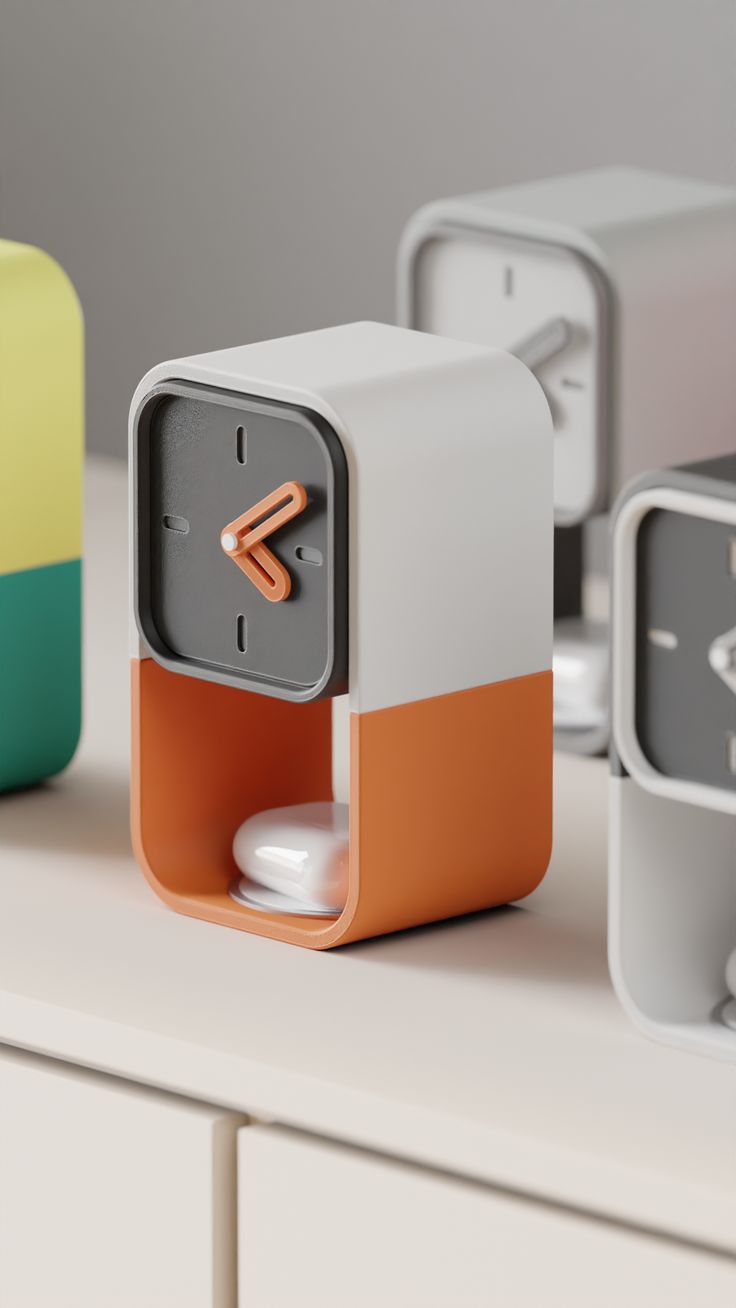
Custom promotional items represent immediate 3D printing applications. Conventional promotional products offer limited customization—logos applied to standard forms. 3D printing creates objects with brand-integrated form—custom shapes, functional designs incorporating brand elements, or personalized items reflecting recipient interests. These objects command attention and retention impossible with conventional giveaways.
Architectural and product models support sales and marketing for real estate developments, manufacturing equipment, or complex services. Physical models communicate scale and spatial relationships that renderings cannot convey. 3D printing produces these models directly from CAD files, enabling rapid iteration as designs evolve.
Custom display fixtures and exhibition components benefit from 3D printing's form freedom. Branded product stands, unique signage mounts, or interactive display elements can be produced without mold costs or minimum quantities. This capability proves particularly valuable for exhibition programs requiring unique elements for each event.
Replacement parts and maintenance items for branded equipment can be produced on-demand without inventory investment. Custom tools, jigs, and fixtures supporting brand operations demonstrate practical 3D printing value beyond marketing applications.
Design Considerations for Additive Manufacturing
3D printing requires design approaches distinct from conventional manufacturing. Overhangs beyond 45 degrees require support structures (in most technologies) that leave surface marks requiring post-processing. Designing self-supporting angles or splitting models for assembly eliminates these artifacts.
Wall thickness and feature size must respect technology limitations. FDM printing requires minimum 0.8mm walls for structural integrity; SLA achieves 0.5mm; SLS provides greatest freedom with 0.5mm walls possible. Embossed or engraved details must exceed nozzle or laser spot sizes to be visible—typically 0.5mm minimum depth/height.
Orientation during printing affects surface finish and strength. Layer lines create visible texture and anisotropic strength—objects are stronger parallel to layers than perpendicular. Strategic orientation optimizes appearance for visible surfaces and strength for load-bearing directions.
Post-processing requirements include support removal, surface smoothing, and finishing. SLA and FDM prints typically require support removal and light sanding. Painting, plating, or other finishes achieve final appearance. These steps add labor and time that should be incorporated in project planning.
Material Selection for Brand Objects
| Material | Technology | Characteristics | Best Applications |
|---|---|---|---|
| PLA | FDM | Biodegradable, easy print, brittle | Concept models, indoor display, eco-friendly items |
| ABS | FDM | Durable, temperature resistant | Functional parts, automotive, outdoor use |
| PETG | FDM | Chemical resistant, tough, clear options | Mechanical parts, containers, lighting |
| Standard Resin | SLA | Smooth, detailed, brittle | Visual models, miniatures, master patterns |
| Tough Resin | SLA | Impact resistant, functional | Functional prototypes, snap-fit parts |
| Nylon (PA12) | SLS | Strong, flexible, chemical resistant | End-use parts, hinges, complex assemblies |
| Full-Color Gypsum | Binder Jetting | Photographic color, brittle | Architectural models, figurines, display |
| TPU | FDM/SLA | Flexible, rubber-like | Grips, seals, wearable items |
Cost Structures and Economic Viability
3D printing economics differ fundamentally from conventional manufacturing. Setup costs are minimal—no molds, dies, or tooling required. Unit costs remain relatively constant regardless of quantity, making the technology competitive for small quantities where conventional methods would require expensive tooling.
Pricing typically follows machine time and material consumption. Small, simple objects might cost KES 500-1,500; medium complexity objects KES 2,000-5,000; large or complex pieces KES 5,000-20,000+. These costs compare favorably to machined or molded prototypes, but exceed mass production unit costs for high volumes.
The economic crossover point where conventional manufacturing becomes cheaper varies by object complexity and size. Simple objects might favor injection molding at 100+ units; complex objects might require 500+ units to justify tooling. 3D printing provides cost-effective path for market testing and initial production before volume scaling.
Integration with Conventional Branding
3D printed objects often combine with conventional printing for complete brand expressions. Printed inserts, labels, or packaging complement 3D printed forms. Painted or plated finishes incorporate brand colors and metallic effects. These combinations leverage strengths of multiple technologies for optimal results.
Design workflows should integrate 3D considerations from project inception. Attempting to convert 2D brand elements to 3D without dimensional design expertise produces disappointing results. Luna Graphics provides 3D design services ensuring brand integrity in dimensional expressions.
Quality standards for 3D printed brand objects must match other brand touchpoints. Layer visibility, surface defects, or dimensional inaccuracy undermine premium positioning. Professional production with appropriate technology selection, parameter optimization, and post-processing achieves quality standards consistent with brand values.
Current Limitations and Future Trajectory
Production speed limits 3D printing scalability. Objects requiring hours of machine time cannot compete with mass production speeds for high volumes. Current applications focus on customization, complexity, and small quantities where speed is less critical.
Material range, while expanding, remains limited compared to conventional manufacturing. Specific mechanical, thermal, or chemical properties may be unavailable in printable formulations. Material selection should verify suitability for intended use environment.
Surface finish generally requires post-processing for premium appearance. Layer lines, support marks, or powder texture may be acceptable for functional prototypes but require finishing for customer-facing brand objects. These processes add time and cost that affect project economics.
Luna Graphics offers 3D printing services integrated with conventional branding capabilities. From design consultation through production and finishing, we enable dimensional brand expressions that differentiate your market presence. Contact our innovation team to explore 3D printing applications for your specific branding challenges.
Written by Ian Love
Marketing Director
Professional contributor at Luna Graphics specializing in printing and branding solutions.