
The Strategic Value of Political Billboards
Political billboards serve as essential campaign infrastructure in Kenyan electoral politics, providing mass visibility, candidate recognition, and message reinforcement across geographic constituencies. In competitive electoral environments, billboard presence signals campaign viability, establishes candidate recognition among low-information voters, and provides rallying points for supporter identification. For Kenyan political campaigns—from presidential contests to parliamentary races to county positions—strategic billboard placement significantly influences electoral outcomes.
However, billboard effectiveness depends on strategic location selection, message discipline, regulatory compliance, and timing optimization. Poorly placed, designed, or timed billboards waste limited campaign resources while potentially generating negative perception. Professional political billboard strategy maximizes return on this essential campaign investment.
Location Strategy and Constituency Targeting
Political billboard location should align with electoral geography—targeting specific constituencies, wards, or voting blocs rather than random high-traffic placement. Urban billboards reach mass audiences but at higher cost and with less targeted impact; rural billboards may provide better voter-per-dollar efficiency in specific constituencies. For Kenyan campaigns, location strategy must consider ethnic and demographic voting patterns, competitive intensity by region, and voter turnout priorities.
Strategic locations include: major transport corridors reaching commuters; urban centers with high population density; rural market towns serving surrounding areas; and specific community centers within targeted voting blocs. Proximity to polling stations provides final-day visibility though regulatory restrictions may apply.
| Location Type | Strategic Value | Targeting Application | Considerations |
|---|---|---|---|
| Highway/transport corridor | Mass reach, commuter exposure | Name recognition, broad messaging | Cost, speed of viewing, safety |
| Urban center | High frequency, diverse audience | Coalition building, urban issues | Clutter, cost, local opposition |
| Rural town | Community influence, cost efficiency | Ethnic targeting, rural issues | Reach limitations, seasonal visibility |
| Community specific | Bloc consolidation, turnout | Ethnic, religious, occupational targeting | Potential backlash, exclusivity perception |
| Opposition stronghold | Presence, challenge, visibility | Erosion, competition | Risk of vandalism, resource efficiency |
| Home area | Base consolidation, identity | Core supporter enthusiasm | Preaching to converted, resource allocation |
Message Strategy and Creative Execution
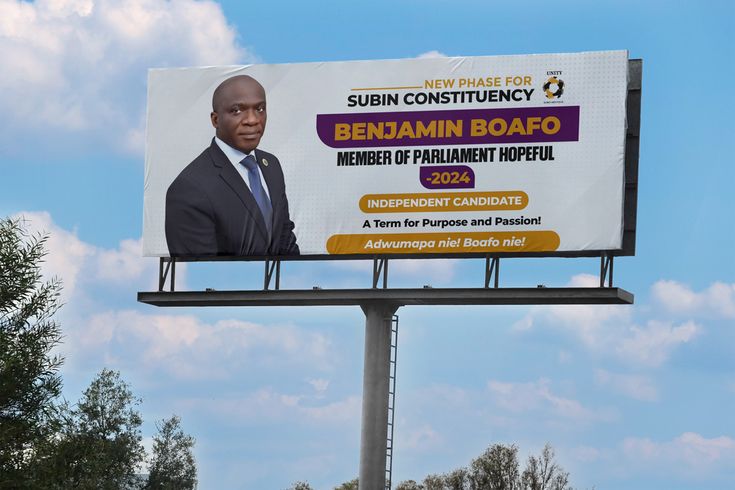
Political billboard messaging must achieve immediate impact given brief exposure duration. Typical political billboards feature: candidate photograph establishing recognition; name in large type; party affiliation or symbol; simple slogan or message; and campaign hashtag or contact. Complexity beyond these elements reduces comprehension and impact.
For Kenyan political campaigns, messaging should consider: ethnic and religious sensitivities avoiding exclusionary signals; language appropriate to location (Swahili, English, or local languages); positive versus attack messaging tradeoffs; and alignment with broader campaign theme. Professional design ensures visibility and memorability.
Regulatory Compliance and Legal Considerations
Political advertising in Kenya operates within regulatory frameworks including Independent Electoral and Boundaries Commission (IEBC) guidelines, county government advertising bylaws, and road authority regulations. Key compliance requirements include: timing restrictions (campaign periods); size and placement standards; removal obligations post-election; and content prohibitions (hate speech, incitement).
Non-compliance risks enforcement action including removal, fines, and legal liability. Professional campaign management includes regulatory compliance as essential component. Luna Graphics provides political billboard services with regulatory awareness ensuring lawful execution.
Timing and Campaign Phases
Political billboard timing should align with campaign phases: early presence establishing name recognition before opposition; intensification during formal campaign period; peak visibility immediately pre-election; and prompt post-election removal regardless of outcome. Premature placement wastes resources and risks voter fatigue; late placement misses awareness building opportunity.
For Kenyan electoral cycles, understanding IEBC timelines and campaign period definitions ensures compliance while optimizing impact. Reservation of premium locations well in advance prevents competition exclusion.
Vandalism and Security Management
Political billboards face elevated vandalism risk in competitive environments, requiring security measures: elevated placement reducing access; durable materials resisting damage; rapid repair protocols; and strategic avoidance of high-conflict areas. For Kenyan campaigns in volatile regions, security considerations may influence location and timing decisions.
Insurance coverage for political advertising damage should be considered, with documentation supporting claims. Relationship with billboard owners and maintenance services enables rapid response to damage.
Integration with Campaign Strategy
Political billboards should integrate with comprehensive campaign strategy: messaging alignment with broadcast and digital advertising; location coordination with rally schedules and ground operations; and visual consistency with campaign identity systems. Disconnected billboard execution wastes resources and confuses voters.
For Kenyan campaigns, billboard strategy should complement rather than substitute for ground game, media relations, and digital engagement. Measurement of billboard impact through awareness polling or voter contact informs resource allocation.
Post-Election Obligations
Political billboard removal obligations apply regardless of election outcome, with timelines specified in permits and regulations. Prompt removal demonstrates respect for community and regulatory compliance; delayed removal generates negative perception and potential enforcement action.
For Kenyan campaigns, post-election planning should include removal resource allocation and site restoration, completing the campaign cycle professionally.
Conclusion: Billboards as Campaign Infrastructure
Political billboards, strategically planned and executed, provide essential visibility and recognition supporting electoral success. For Kenyan political campaigns, professional billboard strategy—location selection, message discipline, regulatory compliance, and timing optimization—maximizes return on this significant campaign investment.
Luna Graphics provides political billboard services with understanding of Kenyan electoral context and regulatory requirements. Our campaign expertise ensures billboard execution supporting electoral objectives while maintaining legal compliance. Contact our political services team to discuss your campaign visibility strategy.
Written by Ian Love
Marketing Director
Professional contributor at Luna Graphics specializing in printing and branding solutions.